Fb-Button
Santana Archives - I Love Blues Guitar
I Love Blues Guitar

Tag: Santana

  • Santana, Chad Kroeger – Into The Night

    Santana, Chad Kroeger – Into The Night

    Santana’s Late-Night Groove Revival: “Into the Night”

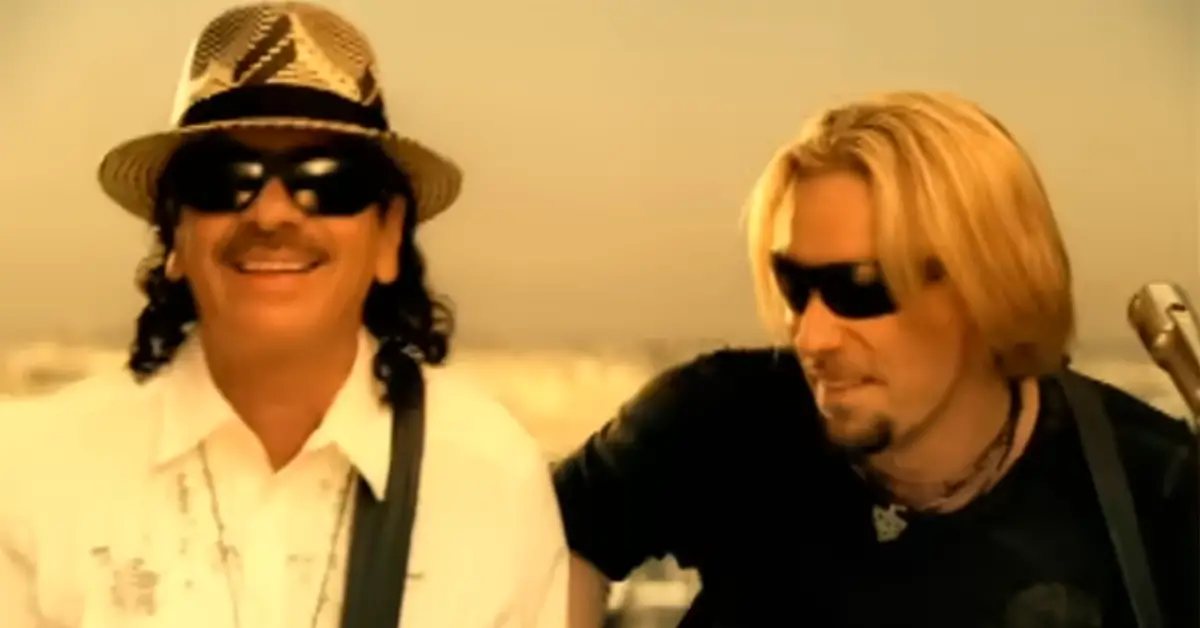
    When Santana teamed up with Chad Kroeger in 2007 for “Into the Night,” the result was a smooth, modern rock crossover that surprised a lot of people—and quietly won over many more. Blending Carlos Santana’s unmistakable Latin guitar voice with Kroeger’s gravel-edged vocals, the song became a nocturnal slow burn built for late drives, dim lights, and reflective moods.

    It wasn’t Santana chasing trends.
    It was Santana absorbing them—and making them his own.


    A Meeting of Two Very Different Rock Worlds

    On paper, the collaboration looked unexpected. Carlos Santana, the spiritual guitar poet of Woodstock and Latin rock royalty, joining forces with the frontman of Nickelback, one of the most dominant mainstream rock bands of the 2000s.

    But Santana had done this before—and brilliantly.
    From Rob Thomas to Eric Clapton, he had a gift for finding voices that could carry emotion without stepping on his guitar’s story.

    Chad Kroeger turned out to be a perfect fit.

    His vocal delivery on “Into the Night” is restrained, weary, and introspective—less arena rock, more late-night confession. It gives the song a grounded emotional core that Santana’s guitar can orbit around.


    Santana’s Guitar: Still the Star of the Show

    Make no mistake—this is still a Santana song.

    His guitar lines glide through the track with liquid elegance, bending notes like sighs and letting silence do as much work as sound. There’s no flash-for-flash’s-sake here. Instead, Santana plays with maturity and patience, letting each phrase linger just long enough to sink in.

    It’s the sound of a master who doesn’t need to prove anything anymore.

    That warm, singing tone—instantly recognizable within seconds—reminds you why Santana’s guitar voice remains one of the most human in rock history.


    A Song Built for the Dark Hours

    Lyrically, “Into the Night” lives in the space between longing and release. It’s about surrendering to emotion, letting go of hesitation, and stepping into vulnerability when the world goes quiet.

    The production reflects that perfectly:

    • Slow, hypnotic groove
    • Subtle Latin-influenced rhythm
    • Polished but not cold
    • Atmosphere over aggression

    It’s a song that doesn’t rush you.
    It waits.
    And when it hits, it hits softly—but deeply.


    Santana’s Second Act, Done Right

    By the mid-2000s, Santana was well into what many artists never achieve: a successful second (or third) creative life. After the massive crossover triumph of Supernatural, he continued collaborating with contemporary artists—not to stay relevant, but to stay curious.

    “Into the Night,” from the album Ultimate Santana, fits perfectly into that philosophy. It shows a legend comfortable sharing space, confident that his voice—especially his guitar—will always be unmistakable.

    And it is.


    Why the Song Still Works

    Years later, “Into the Night” remains a track that sneaks up on listeners. It’s not loud. It’s not flashy. It doesn’t beg for attention.

    Instead, it rewards repeat listens.

    Fans of Santana appreciate the tasteful restraint.
    Fans of Kroeger hear a more nuanced side of his voice.
    And casual listeners get a song that feels cinematic, sensual, and quietly powerful.


    A Smooth, Unexpected Classic of Its Era

    “Into the Night” proves that great collaborations aren’t about matching styles—they’re about balancing energy. Santana brings soul and melody. Kroeger brings grit and emotional weight. Together, they create something that feels intimate rather than calculated.

    It’s the sound of two different rock generations meeting after midnight, turning the lights low, and letting the music do the talking.

    Smooth, atmospheric, and unmistakably Santana—“Into the Night” is proof that true guitar voices never fade. They just learn how to whisper.
  • Santana – While My Guitar Gently Weeps

    Santana – While My Guitar Gently Weeps

    Santana – “While My Guitar Gently Weeps”: A Soulful Tribute to Musical Emotion

    Originally penned by George Harrison and released on The Beatles’ self-titled 1968 “White Album,” “While My Guitar Gently Weeps” has long been considered one of rock’s most emotionally resonant guitar ballads. In 2010, legendary guitarist Carlos Santana revisited the song on his album Guitar Heaven: The Greatest Guitar Classics of All Time, delivering a version that’s haunting, passionate, and deeply reverent.

    Featuring India.Arie on lead vocals and Yo-Yo Ma on cello, Santana’s interpretation isn’t just a cover — it’s a reinterpretation, rooted in spirituality, musical unity, and expressive depth.


    The Sound: Where Latin Soul Meets Eastern Melancholy

    Santana’s version opens with soft acoustic guitar and ambient textures, creating a space that feels meditative and almost ceremonial. The arrangement gently builds with:

    • Yo-Yo Ma’s mournful cello, adding a classical gravitas that echoes the song’s introspective sorrow
    • India.Arie’s smooth, soulful vocals, offering a warm, empathetic delivery of Harrison’s poetic lines
    • And Santana’s guitar, of course — lyrical, emotional, and unmistakably his, weeping in long, singing bends and tremolos

    Rather than replicate the original’s blues-rock grit (famously featuring Eric Clapton on lead guitar), Santana slows things down, leaning into emotional depth and expressive tone over showmanship.


    The Lyrics: Compassion in a Broken World

    “I look at the world and I notice it’s turning / While my guitar gently weeps…”

    Harrison’s lyrics are timeless in their gentle sorrow and existential weight. They express a frustration with human indifference — a sense of watching the world hurt itself while feeling powerless to stop it.

    “With every mistake, we must surely be learning…”

    In Santana’s hands, these lines gain a new kind of resonance. India.Arie sings not with rock star bravado, but with compassion and grace — more like a prayer than a performance.


    Context: A Meeting of Musical Minds

    Santana’s Guitar Heaven album was a passion project — a collection of classic rock songs reinterpreted through his signature Latin rock style, featuring a variety of guest vocalists. But “While My Guitar Gently Weeps” stands out as the emotional centerpiece of the record.

    The inclusion of Yo-Yo Ma was inspired — his cello brings a depth rarely found in rock recordings, complementing Santana’s expressive lead guitar to create a wordless dialogue of pain and hope.

    India.Arie, known more for her neo-soul and R&B roots, proves herself an ideal choice here — understated, spiritual, and soulful, she connects with the song’s emotional core in a way that feels both deeply personal and universally human.


    Reception: A Quiet Triumph

    Though not a mainstream chart hit, Santana’s version of “While My Guitar Gently Weeps” was widely praised by fans and critics for its dignity and depth. It has become a fan-favorite track from Guitar Heaven and is often cited as one of the most sensitive, respectful covers of a Beatles song ever recorded.

    It also reinforced Santana’s ongoing mission: to use his music as a healing force, a tool for connection and transcendence.


    Final Thoughts

    In Santana’s hands, “While My Guitar Gently Weeps” becomes less of a lament and more of a benediction. It doesn’t scream. It sighs. It doesn’t rage — it reflects. And it gently urges us, as Harrison did, to care more, to feel deeper, and to notice what we’ve overlooked.

    The guitar still weeps.
    But in Santana’s version, it weeps not in despair, but in hope —
    That by listening, we might finally learn.

  • Santana – Corazon Espinado

    Santana – Corazon Espinado

    Santana – “Corazón Espinado”: Latin Rock Fire with a Stab of Soul

    When Carlos Santana teamed up with Maná—Mexico’s premier rock en español band—for the electrifying “Corazón Espinado” in 1999, the result was nothing short of a Latin rock masterclass. Blending Santana’s legendary guitar tone with Maná’s passionate vocals and rhythmic fire, the song became a modern classic—equal parts heartbreak and dancefloor heat.

    Appearing on Santana’s comeback album Supernatural, “Corazón Espinado” stood out not just for its Latin flavor but for its authenticity, energy, and irresistible groove. It’s a song that hurts and moves you—all at once.

    The Sound: Afro-Latin Rock Meets Arena Swagger

    Musically, “Corazón Espinado” is a bold, rhythmic fusion of rock, salsa, and Latin pop. It kicks off with an instantly infectious guitar riff—Santana’s signature tone cutting through like a blade wrapped in silk.

    From there, the track dives into a danceable stew of percussion-heavy grooves, horn stabs, and guitar flourishes that swirl around Fher Olvera’s emotive vocals. The interplay between Santana’s lead guitar and the band’s tight instrumentation creates a sonic call-and-response that feels alive.

    It’s one of those songs where you can feel the heat rising off the recording.

    The Lyrics: Love’s Beautiful Pain

    “Esa mujer me está matando / Me ha espinado el corazón…”
    “That woman is killing me / She has pierced my heart…”

    The title “Corazón Espinado” literally means “thorned heart” or “stabbed heart,” and the lyrics follow suit—a lament for a love that both enchants and destroys. It’s the kind of heartbreak that’s poetic, yes—but also deeply physical. You feel it in the gut, in the chest, in the hips.

    Olvera delivers the lines not with melodrama but with real, burning passion. It’s not about sorrowful wallowing—it’s about trying to dance through the pain.

    And that’s the Latin rock genius of the track: you’re heartbroken, but you still move.

    The Collaboration: Santana + Maná = Fire

    By the late ’90s, Santana was ready for a comeback—and Supernatural delivered in spades, with mega-hits like “Smooth” (featuring Rob Thomas) and “Maria Maria.” But “Corazón Espinado” was special. It wasn’t just a radio-ready crossover—it was a moment of cultural synergy.

    Maná, already huge in the Spanish-speaking world, brought their emotional songwriting, rhythmic muscle, and pan-Latin identity to the mix. And Santana, a Mexican-American guitar god, met them with decades of fusion experience and global rock credibility.

    The result? A track that didn’t feel like a guest spot—it felt like a real band, completely in sync.

    Impact: A Cross-Generational, Cross-Border Smash

    “Corazón Espinado” became a massive hit across Latin America and Spain, winning three Latin Grammy Awards and expanding Santana’s reach into younger and Spanish-speaking audiences. It solidified Supernatural not only as a comeback but as a genre-bridging triumph.

    It remains a live staple for both Santana and Maná—and a go-to track at Latin rock nights, weddings, and anywhere that passion and rhythm are in the air.

    Legacy: Heartbreak Has Never Sounded So Alive

    In a career filled with unforgettable collaborations, “Corazón Espinado” stands tall as one of Santana’s most emotionally potent and rhythmically irresistible songs. It showed the world that Latin rock wasn’t a side genre—it was a global force, capable of expressing the deepest pain through the most joyful grooves.

    Final Thoughts

    “Corazón Espinado” is what happens when heartbreak meets the dance floor.
    It’s a thorn in your side, a tear in your eye, and a rhythm in your bones.
    It doesn’t ask you to stop hurting—it invites you to move through it.

    With Carlos Santana’s guitar as the voice of pain and passion,
    and Maná’s fire pouring gasoline on the flame,
    this song doesn’t just play—it burns.

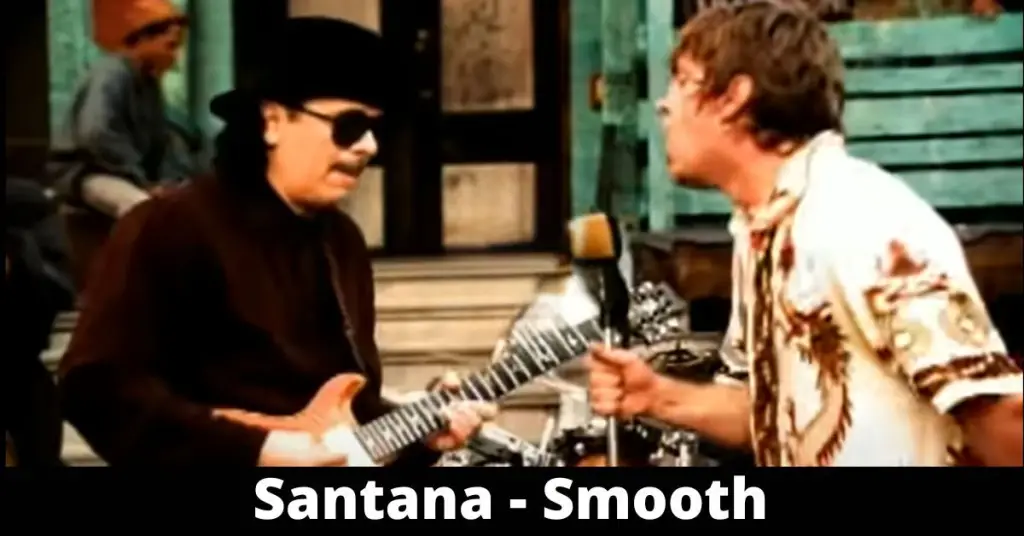
  • Santana – “Smooth”: The Latin-Rock Revival That Set the World on Fire

    Santana – “Smooth”: The Latin-Rock Revival That Set the World on Fire

    In the summer of 1999, at the brink of a new millennium, a guitar legend teamed up with a modern rock crooner and created a song so catchy, so confident, and so universally beloved that it didn’t just top the charts—it reshaped the pop landscape. That song was “Smooth,” a fiery fusion of Latin rock, pop, soul, and salsa that saw Carlos Santana and Rob Thomas of Matchbox Twenty light the fuse for one of the biggest musical comebacks in history.

    More than two decades later, “Smooth” is still just that: irresistibly slick, endlessly replayable, and hotter than a seven-inch on a midsummer’s day.

    The Comeback Nobody Saw Coming

    Carlos Santana had long been revered as a guitar god, especially for his groundbreaking work in the late ’60s and ’70s that fused Afro-Latin rhythms with psychedelic blues. But by the mid-’90s, his mainstream visibility had cooled. Then came Supernatural—a collaborative album that paired Santana with a wide array of contemporary artists.

    At the heart of the project was “Smooth,” co-written by Rob Thomas and Itaal Shur. Originally intended as a Matchbox Twenty demo, the song took on a whole new life once Santana’s signature tone was layered in. What followed wasn’t just a hit—it was a phenomenon.

    The Sound: Sizzling, Sultry, and Infectious

    “Smooth” opens with that unmistakable Santana touch—a bluesy, Latin-tinged guitar riff that instantly sets the temperature to steamy. Then comes Rob Thomas, delivering his vocals with swagger and soul, perfectly capturing the song’s mood: lusty, loose, and loaded with heat.

    “Man, it’s a hot one / Like seven inches from the midday sun…”

    With percussion-heavy backing, including timbales, congas, and shakers, and a rhythm section that dances as much as it drives, “Smooth” doesn’t just play—it moves. Santana’s guitar wails, whines, and sings, slipping between Thomas’s lines like a second voice in a sweaty conversation.

    It’s a track that oozes charisma, blending rock riffs with salsa spice, making it as irresistible on a dance floor as it was on Top 40 radio.

    Lyrics: Cool Lines, Hot Nights

    The lyrics of “Smooth” are pure poetic seduction—sensual, confident, and a little mysterious. Rob Thomas plays the role of the love-struck narrator who’s helpless under the spell of a woman so captivating, she changes the weather.

    “You got that kind of lovin’ that can be so smooth / Gimme your heart, make it real, or else forget about it.”

    It’s part pickup line, part soul confession—and all attitude. The song walks the fine line between sexy and sincere, which made it wildly appealing to audiences of all ages.

    Chart Domination and Grammy Gold

    “Smooth” hit #1 on the Billboard Hot 100 in the summer of 1999 and stayed there for 12 consecutive weeks. It became one of the defining songs of the year—and the entire decade. At the 2000 Grammy Awards, “Smooth” helped Supernatural sweep with nine wins, including Record of the Year and Song of the Year.

    It also holds a rare distinction: it’s one of Billboard’s greatest songs of all time, ranked high on all-time Hot 100 lists and still enjoying a vibrant afterlife in pop culture.

    Legacy: A Timeless Crowd-Pleaser

    In the years since its release, “Smooth” has taken on cult status—not just as a hit, but as a meme, a vibe, a state of mind. Whether it’s playing at weddings, cookouts, classic rock stations, or popping up in internet humor, “Smooth” endures because it’s fun, cool, and unapologetically bold.

    It also reintroduced Santana to a new generation, proving that guitar-based music could thrive in a pop world ruled by boy bands and TRL. Santana followed “Smooth” with other successful collaborations, but none quite matched the magic, chemistry, and swagger of this one.

    Final Thoughts

    “Smooth” isn’t just a hit single—it’s a lightning-in-a-bottle moment where generations, genres, and cultures collided and created something unforgettable.

    It made Santana a chart-topper again.
    It made Rob Thomas the frontman of the year.
    And it made everyone want to dance like it was 99 degrees in the shade.

    So go ahead—crank it up.
    It’s still a hot one.

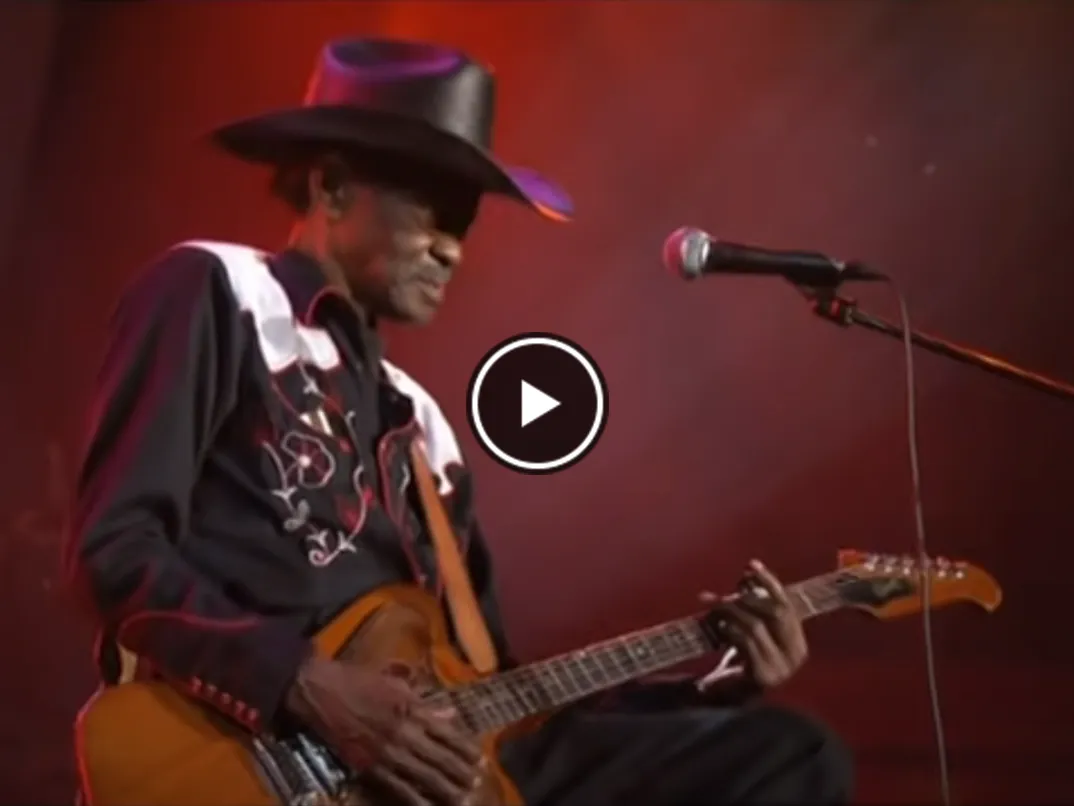
  • The Drifter – Clarence Gatemouth Brown with Carlos Santana

    The Drifter – Clarence Gatemouth Brown with Carlos Santana

    The Drifter – Clarence Gatemouth Brown with Carlos Santana
    The Drifter – Clarence Gatemouth Brown with Carlos Santana

    I love blues guitar violin especially in hands of Clarence Gatemouth Brown. He plays the guitar here too and sings in the company with Santana on the guitar and brass section. 15 minutes of great music and blues.

    Clarence “Gatemouth” Brown

    (April 18, 1924 – September 10, 2005)

    …was an American musician from Louisiana and Texas. He is best known for his work as a blues musician, but embraced other styles of music, having “spent his career fighting purism by synthesizing old blues, country, jazz, Cajun music and R&B styles”. His work also encompasses rock and roll, rock music, folk, electric blues, and Texas blues

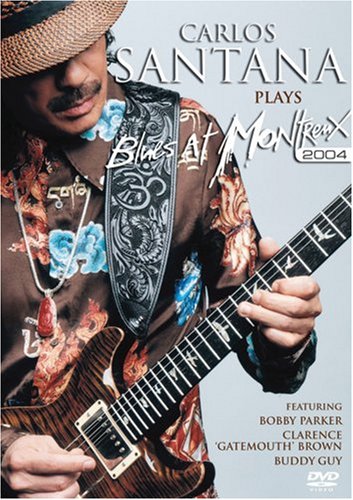
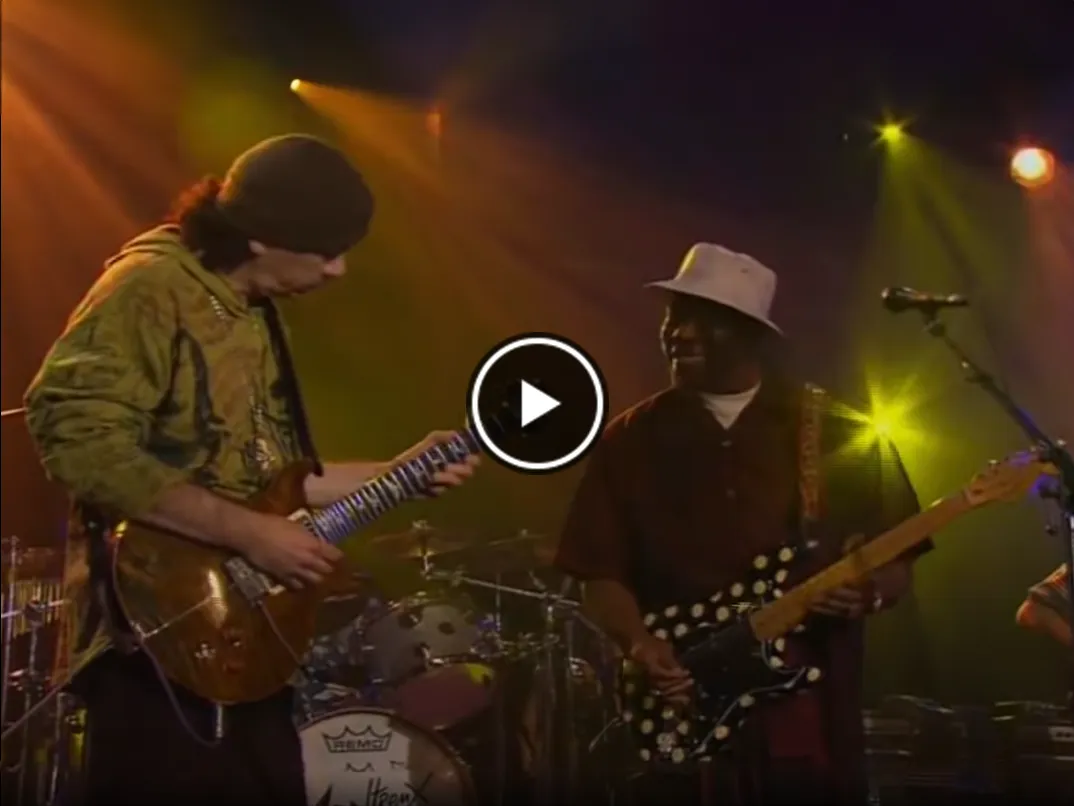
    Clarence Gatemouth Brown with Carlos Santana at the Montreux 2004

    More Info

    In the early 1970s several countries in Europe had developed an appreciation for American roots music, especially the blues, and Brown was a popular and well-respected artist there. He toured Europe twelve times, beginning in 1971 and continuing throughout the 1970s. He also became an official ambassador for American music, and participated in several tours sponsored by the U.S. State Department, including an extensive tour of Eastern Africa. Brown appeared at the 1973 Montreux Jazz Festival, where he jammed with American blues rock band Canned Heat.[

    Santana

    Carlos Santana – legendary musician, guitar virtuoso. He was born in Mexico, Autlan de Navarro, on July 20, 1947. In the early 1960s, he came to the USA and settled in San Francisco. A few years later, in 1966, the musician founded a band called Santana Blues Band, which still exists today as Santana, creates rock music inspired by Latin American folklore and blues.
    In the course of over 30 years of his career, with his band, he has released more than 20 albums and recorded 7 solo albums sold in a total of over 50 million copies, the band also played concerts for over 30 million fans. The musician has won countless awards and distinctions, including in 1998 he was inducted into the Rock’n’Roll Hall Of Fame (Rock’n’Roll Hall of Fame).

    Video

    Thank You

    We appreciate your time and dedication to reading our article. For more of the finest blues guitar music, make sure to follow our Facebook page, “I Love Blues Guitar”. We share exceptional selections every day. Thank you once again for your continued support and readership.

  • Buddy Guy, Carlos Santana – Stormy Monday

    Buddy Guy, Carlos Santana – Stormy Monday

    Buddy Guy

    Five-time Grammy Award winner and one of the greatest American blues and rock guitarists and singers. Geroge “Buddy” Guy was born on July 30, 1936 in Lettsworth, Lujzjana.
    Buddy Guy began performing in the early 1950s. When he moved to Chicago in 1957, his greatest inspiration was Muddy Waters, the champion of the Chicago scene. A year later, he managed to sign a record deal with the well-known Chess label. During this time, he also recorded with Junior Wells.
    However, the times spent on Chess Records were not the best for Buddy Guy – the artist did not find there understanding for his unique style, similar in sound to live performances. The only album he recorded at that time was “Left My Blues In San Francisco”. On Chess Records, Guy was active primarily as a session musician, having the pleasure of recording with artists such as Muddy Waters, Koko Taylor and Howlin ‘Wolf.

    Buddy in Great Britain

    The reputation of Buddy Guy was also known in Great Britain, where he first came in 1965. The scene was soaking up the inspiration of the American blues. Guy was one of the favorites of rockers such as Jeff Beck and Eric Clapton. After years of disappointment, the musician finally ended up being an accomplice with the Chess label. He moved to Vanguard, where he released, among others “Blues Today” or “Hot and Cool”.

    The artist’s career, however, did not reach the extent it certainly deserved. Despite the fact that he greatly inspired the blues-rock scene, she triumphed without him. Over the next two decades, the musician experienced a situation that happens to many great creators. Visionaries and artists who pave the way, are eclipsed by followers who claim fame, success and money.

    A positive breakthrough in the career of Buddy Guy took place in the late 1980s, when blues music began to experience a revival. The support he received from Eric Clapton, who invited him to perform with other guitarists at a show in London, was also important. During this time, he recorded successfully for the Silvertone label.

    I like the way the rhythm section has a raw grungy sound to it, epitomizes the background scenery of the film Chicago Blues.

    You can’t beat some raw Chicago Blues. Buddy is a rare specimen: supreme guitarist and a great singer in one!

    Santana

    Carlos Santana – legendary musician, and guitar virtuoso. He was born in Mexico, Autlan de Navarro, on July 20, 1947. In the early 1960s, he came to the USA and settled in San Francisco. A few years later, in 1966, the musician founded a band called Santana Blues Band, which still exists today as Santana, creating rock music inspired by Latin American folklore and blues.
    In the course of over 30 years of their career, with his band, he has released more than 20 albums and recorded 7 solo albums sold in a total of over 50 million copies, the band also played concerts for over 30 million fans. The musician has won countless awards and distinctions, including in 1998 he was inducted into the Rock’n’Roll Hall Of Fame (Rock’n’Roll Hall of Fame).

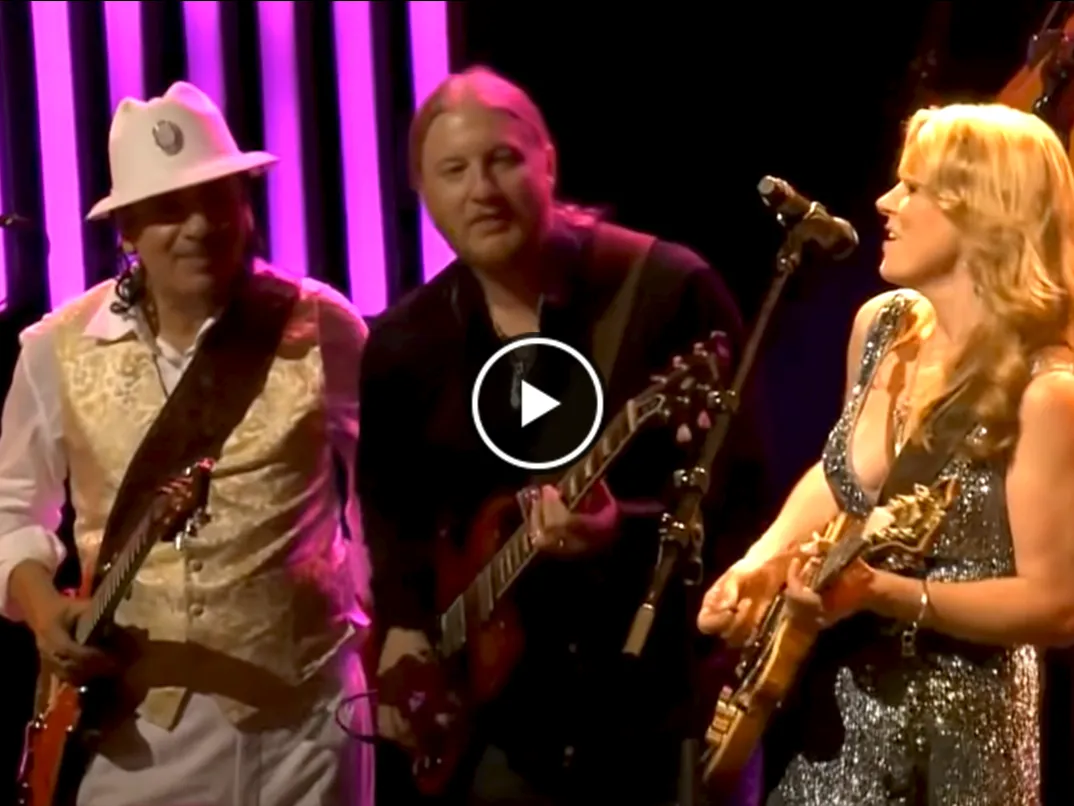
  • Santana – Make Somebody Happy (Susan Tedeschi, Derek Trucks)

    Santana – Make Somebody Happy (Susan Tedeschi, Derek Trucks)

    Santana – Make Somebody Happy (Susan Tedeschi, Derek Trucks)
    Santana – Make Somebody Happy (Susan Tedeschi, Derek Trucks)

    The Electrifying Fusion: “Make Somebody Happy” at Santana ‘s “Live in Montreux” Featuring Susan Tedeschi and Derek Trucks

    When a song becomes more than just a composition, evolving into an emotion, an atmosphere, or an entire mood, it’s evident that there’s magic happening. This is precisely what transpired at Santana’s “Live in Montreux” concert when the legendary Carlos Santana joined forces with the phenomenal Susan Tedeschi and Derek Trucks to deliver an unforgettable rendition of “Make Somebody Happy.”

    Santana: The Eternal Guitar Maestro

    Carlos Santana, whose illustrious career spans over five decades, is best known for his unique fusion of rock, Latin American jazz, and blues. From “Black Magic Woman” to “Smooth,” Santana’s wide-ranging repertoire showcases not only his extraordinary guitar-playing abilities but also his knack for blending various genres in a seamless manner.

    Derek Trucks: The Slide Prodigy

    Derek Trucks, known for his formidable slide guitar technique, began his musical journey at an incredibly young age. He had already performed alongside the likes of Buddy Guy and Bob Dylan before he turned 20. A key member of the Allman Brothers Band, Trucks co-leads the Tedeschi Trucks Band with his equally talented wife, Susan Tedeschi.

    Susan Tedeschi: The Soulful Songstress

    With a voice that effortlessly oscillates between raw power and subtle tenderness, Susan Tedeschi is a force to be reckoned with. Her musical journey, deeply rooted in gospel-infused blues, led her to several Grammy nominations even before she teamed up with Trucks to form the Tedeschi Trucks Band. Together, they’ve become one of the most revered power couples in contemporary blues.

    “Make Somebody Happy”: A Mesmerizing Collaboration

    At the Montreux concert, the trio breathed a fresh life into “Make Somebody Happy.” Santana’s trademark guitar tone perfectly complemented the earthy, profound sound of Trucks’ slide guitar. Tedeschi’s soul-stirring vocals added a layer of depth and emotion to the performance, making it a song not just for the ears, but for the heart.

    What made this collaboration even more memorable was the evident chemistry between the artists. There was a silent, almost palpable conversation occurring between Santana and Trucks, their guitars intertwining in a harmonious dance. Tedeschi’s voice served as the powerful bridge, connecting the passionate instrumentals with the deep-seated emotions of the audience.

    Music, when created with genuine emotion and passion, transcends mere sound waves. The rendition of “Make Somebody Happy” at Santana’s “Live in Montreux” concert epitomized this. With Carlos Santana’s legendary guitar prowess, Derek Trucks’ slide mastery, and Susan Tedeschi’s heart-rending vocals, the performance was not just a treat for blues aficionados but for anyone who cherishes artistry at its best.

  • John Lee Hooker, Carlos Santana – Blues Boogie Jam

    John Lee Hooker, Carlos Santana – Blues Boogie Jam

    John Lee Hooker

    John Lee Hooker was a notable American blues singer, guitarist and songwriter. His fame rose when he performed electric guitar adaptations of Delta Blues. He also has this inclination to insert early North Mississippi Hill country blues and talking blues into his music with a genius twist.

    He is often compared in greatness to B. B. King, who was also born in Mississippi, just like Hooker. King’s contribution to Delta blues was a comprehensive guitar technique that harmonized blues with components of jazz, rhythm and blues and other popular music genres.

    But John Lee Hooker created a style of his own, in contrast, by retaining a pure and traditional approach of the Delta blues. In the postwar, he achieved more success, doing a crossover, using vocals with solo guitar. This was the style of earlier Delta players which he adopted, used to the hilt in his hit record, Boogie Chillen, in 1948.

    The later releases of John Lee like I’m in the Mood (1951), Boom Boom (1962) and The Healer (1989), incorporated soul and rock music.

    When Hooker was starting out in his musical career, he performed and recorded with rock musicians. One of his earliest partnerships was with The Groundhogs, a British blues rock band.

    In 1970, he played adaptations of his songs with the group Canned Heat, an American blues and boogie rock band. The result was the joint album Hooker ‘n Heat.

    At his best, only with his electric guitar strapped on him, Hooker describes his musical style:

    The display of aggressive energy in fast boogies and also an ample show of intensity for stark and slow blues. A back to the basics guitarist – playing simple harmonies, pentatonic scales and also one chord modal harmonic structures.

    John Lee Hooker toured expansively beginning the 1950s and he also made appearances in movies like The Blues Brothers (1980) and The Color Purple (1985). He was inducted into the Rock and Roll Hall of Fame in 1991 and had a huge influence on bands such as The Animals and The Rolling Stones.

    John Lee Hooker recorded more than 100 albums. Among them was The Healer (1989) which had appearances by Carlos Santana and Bonnie Raitt. Other notable albums are The Best of Friends (1998) and Grammar Award winner Don’t Look Back (1997).

    Santana

    Carlos Santana – legendary musician, guitar virtuoso. He was born in Mexico, Autlan de Navarro, on July 20, 1947. In the early 1960s, he came to the USA and settled in San Francisco. A few years later, in 1966, the musician founded a band called Santana Blues Band, which still exists today as Santana, creates rock music inspired by Latin American folklore and blues.
    In the course of over 30 years of career, with his band, he has released more than 20 albums and recorded 7 solo albums sold in a total of over 50 million copies, the band also played concerts for over 30 million fans. The musician has won countless awards and distinctions, including in 1998 he was inducted into the Rock’n’Roll Hall Of Fame (Rock’n’Roll Hall of Fame).

  • Buddy Guy, Carlos Santana – Stormy Monday

    Buddy Guy, Carlos Santana – Stormy Monday

    Buddy Guy, Carlos Santana – Stormy Monday
    Buddy Guy, Carlos Santana – Stormy Monday

    Buddy Guy

    Five-time Grammy Award winner and one of the greatest American blues and rock guitarists and singers. Geroge “Buddy” Guy was born on July 30, 1936 in Lettsworth, Lujzjana.
    Buddy Guy began performing in the early 1950s. When he moved to Chicago in 1957, his greatest inspiration was Muddy Waters, the champion of the Chicago scene. A year later, he managed to sign a record deal with the well-known Chess label. During this time, he also recorded with Junior Wells.
    However, the times spent on Chess Records were not the best for Buddy Guy – the artist did not find there understanding for his unique style, similar in sound to live performances. The only album he recorded at that time was “Left My Blues In San Francisco”. On Chess Records, Guy was active primarily as a session musician, having the pleasure of recording with artists such as Muddy Waters, Koko Taylor and Howlin ‘Wolf.

    Buddy in Great Britain

    The reputation of Buddy Guy was also known in Great Britain, where he first came in 1965. The scene was soaking up the inspiration of the American blues. Guy was one of the favorites of rockers such as Jeff Beck and Eric Clapton. After years of disappointment, the musician finally ended up being an accomplice with the Chess label. He moved to Vanguard, where he released, among others “Blues Today” or “Hot and Cool”.

    The artist’s career, however, did not reach the extent it certainly deserved. Despite the fact that he greatly inspired the blues-rock scene, she triumphed without him. Over the next two decades, the musician experienced a situation that happens to many great creators. Visionaries and artists who pave the way, are eclipsed by followers who claim fame, success and money.

    A positive breakthrough in the career of Buddy Guy took place in the late 1980s, when blues music began to experience a revival. The support he received from Eric Clapton, who invited him to perform with other guitarists at a show in London, was also important. During this time, he recorded successfully for the Silvertone label.

    I like the way the rhythm section has a raw grungy sound to it, epitomizes the background scenery of the film Chicago Blues.

    You can’t beat some raw Chicago Blues. Buddy is a rare specimen: supreme guitarist and a great singer in one!

    Santana

    Carlos Santana – legendary musician, and guitar virtuoso. He was born in Mexico, Autlan de Navarro, on July 20, 1947. In the early 1960s, he came to the USA and settled in San Francisco. A few years later, in 1966, the musician founded a band called Santana Blues Band, which still exists today as Santana, creating rock music inspired by Latin American folklore and blues.
    In the course of over 30 years of their career, with his band, he has released more than 20 albums and recorded 7 solo albums sold in a total of over 50 million copies, the band also played concerts for over 30 million fans. The musician has won countless awards and distinctions, including in 1998 he was inducted into the Rock’n’Roll Hall Of Fame (Rock’n’Roll Hall of Fame).

    Buddy Guy, Carlos Santana – Stormy Monday
    Buddy Guy, Carlos Santana – Stormy Monday
  • Santana – Make Somebody Happy (Susan Tedeschi, Derek Trucks)

    Santana – Make Somebody Happy (Susan Tedeschi, Derek Trucks)

    The Beautiful Performance of “Make Somebody Happy” at Santana ‘s “Live in Montreux” Concert

    It was a night to remember at Montreux as three titans of blues music took the stage together to perform an unforgettable rendition of “Make Somebody Happy.” Carlos Santana, the legendary guitarist, welcomed special guests Susan Tedeschi and Derek Trucks for a truly magical performance. This trio’s collaboration provided a musical experience that transcended the boundaries of genre and touched the very soul of blues music.

    Carlos Santana

    Carlos Santana, born on July 20, 1947, in Autlán de Navarro, Mexico, is a world-renowned musician known for his unique fusion of rock, blues, jazz, and Latin sounds. His career spans over five decades, and he’s responsible for some of the most memorable riffs in the history of guitar music. Santana has won numerous awards, including 10 Grammy Awards and 3 Latin Grammy Awards.

    Susan Tedeschi

    Born on November 9, 1970, in Boston, Massachusetts, Susan Tedeschi is a blues and soul musician renowned for her singing voice that’s often likened to that of Janis Joplin. With a blend of gospel-infused vocals and blues guitar skills, she has carved out a unique space in the music world. Tedeschi has been nominated for several Grammy Awards, earning recognition for her contributions to contemporary blues music.

    Derek Trucks

    Derek Trucks, born on June 8, 1979, in Jacksonville, Florida, is a virtuoso slide guitar player. His style is an amalgamation of blues, soul, jazz, and world music. As a former member of The Allman Brothers Band and co-leader of the Tedeschi Trucks Band with his wife, Susan Tedeschi, Trucks has been hailed as one of the greatest guitarists of his generation. He’s received multiple Grammy Award nominations and has won several as well.

    The Performance

    The stage was set at the beautiful Montreux venue, and the air was filled with anticipation as Carlos Santana started the opening notes of “Make Somebody Happy.” The crowd erupted in excitement as Tedeschi and Trucks joined in, crafting a rich tapestry of sound that was both raw and polished.

    The synergy between the three artists was palpable. Santana’s signature guitar tone, combined with Tedeschi’s powerful vocals and Trucks’ emotive slide guitar, created a rendition of “Make Somebody Happy” that was nothing short of mesmerizing. The performance was filled with improvisational jams that showcased each musician’s unique style, while also forming a harmonious blend that felt organic and spontaneous.

    The audience was left in awe as the trio reached the climax of the song, and the ensuing standing ovation was a testament to the musical mastery displayed on the stage. It was a night that those present will never forget, a once-in-a-lifetime collaboration that captured the essence of blues music and showcased the talents of three of the genre’s most celebrated musicians.

    The “Live in Montreux” concert featuring Carlos Santana, Susan Tedeschi, and Derek Trucks will go down in history as a landmark event in the world of blues music. This performance of “Make Somebody Happy” was a celebration of musical creativity, passion, and excellence. It serves as a reminder of the enduring power of blues music and the exceptional talents of those who continue to push its boundaries.