Fb-Button
U2 Archives - I Love Blues Guitar
I Love Blues Guitar

Tag: U2

  • U2 – Ordinary Love

    U2 – Ordinary Love

    U2’s Poetic Tribute: “Ordinary Love”

    When U2 released “Ordinary Love” in 2013, it wasn’t just another single—it was a heartfelt tribute to Nelson Mandela, written for the film Mandela: Long Walk to Freedom. Tender, melodic, and quietly powerful, the song shows a side of the band that’s reflective rather than revolutionary, offering something intimate from a group more often associated with a stadium-sized roar.


    A Portrait of Mandela Through Melody

    Mandela was a longtime inspiration for U2, especially Bono, who admired his courage, compassion, and commitment to reconciliation. When the filmmakers approached the band for a song, U2 crafted something that didn’t aim for heroic grandeur but instead focused on the emotional core of Mandela’s story: his extraordinary capacity for love.

    The title says it all.
    The track celebrates ordinary love—the quiet, everyday compassion that has the power to change nations.

    It’s the kind of message U2 has always delivered best: deeply personal, yet universally resonant.


    A Softer Sound for a Giant Legacy

    Musically, “Ordinary Love” stands apart from U2’s usual anthemic territory. The Edge trades in chiming, wide-open guitar lines for a gentler, more atmospheric approach; Adam Clayton’s bass moves with understated grace; and Larry Mullen Jr. keeps the rhythm heartbeat-steady.

    Bono’s vocal is the centerpiece—warm, soulful, contemplative. You can hear the reverence in every line, especially as he leans into the chorus:

    We can’t fall any further if
    We can’t feel ordinary love…

    It’s a simple message wrapped in a soothing, melodic glow.


    A Song That Marked a Transitional Moment

    At the time of release, fans were eagerly awaiting new U2 material after a quiet spell. “Ordinary Love” offered a glimpse into the band’s evolving sound—less bombastic, more nuanced, almost painterly in its production.

    The track earned the band a Golden Globe Award, reminding the world that U2 could still craft songs that feel deeply contemporary while staying true to their emotional DNA.

    It also hinted at the more introspective direction they would pursue with Songs of Innocence a year later.


    Poetry, Politics, and the Heart of U2

    Bono has often said that Mandela taught him more about forgiveness and humility than anyone else he’d ever known. That wisdom threads its way through the lyrics—gentle meditations on resilience, hope, and the kind of love that carries the world forward even when everything feels fractured.

    U2 could have written a grand, sweeping anthem.
    Instead, they wrote something human.

    Something soft.
    Something true.

    And that restraint is what makes “Ordinary Love” so powerful.


    A Modern Classic in the U2 Story

    “Ordinary Love” may not be a stadium banger, but it has become one of U2’s most touching late-era songs. It’s the sound of a band stepping back, breathing deep, and offering a musical embrace to one of the greatest figures of our time.

    Elegant, sincere, and quietly luminous, the song stands as a reminder that sometimes the most extraordinary things in life begin with something beautifully ordinary.

    In the end, U2 didn’t just honor Mandela—they captured his heart.

  • U2 – With Or Without You

    U2 – With Or Without You

    U2 – With or Without You: The Sound of Love and Surrender

    When Vulnerability Became Epic

    Some songs don’t just tell a story — they become one. U2’s “With or Without You,” released in 1987 on The Joshua Tree, is one of those timeless pieces that feels as much like a confession as a song. It’s a love story tangled in tension, faith, and yearning — a struggle between devotion and self-destruction.

    The first time I heard it, I was struck by how quiet it felt. The band that once shouted revolution suddenly whispered heartache, and somehow, it hit even harder.

    The Making of a Masterpiece

    By the time U2 began recording The Joshua Tree, they were already on the edge of greatness. But “With or Without You” almost didn’t make the cut. Bono had written it, but couldn’t figure out how to make it work. The breakthrough came when The Edge and producer Daniel Lanois layered in the Infinite Guitar, creating that swelling, atmospheric tone that became the song’s heartbeat.

    What emerged was something new for U2 — minimalist but monumental, emotionally raw yet sonically vast.

    The Lyrics: Love, Pain, and Paradox

    Bono’s words in “With or Without You” are simple but devastating. It’s not a love song in the traditional sense — it’s a portrait of emotional conflict, the kind that comes from loving someone so deeply it hurts.

    “See the stone set in your eyes,
    See the thorn twist in your side…”

    It’s poetry disguised as pop — full of biblical imagery and quiet torment. The refrain —

    “With or without you, I can’t live…”

    — is less a declaration than a surrender. Bono isn’t choosing between love and freedom — he’s admitting he can’t have one without losing the other.

    That’s why the song feels universal. It’s about every kind of love that asks too much and gives even more.

    The Music: The Art of Restraint

    Musically, “With or Without You” is built on simplicity. Adam Clayton’s pulsing bass anchors the song like a heartbeat, while Larry Mullen Jr.’s drumming stays restrained, letting the tension build slowly.

    The Edge’s guitar work, drenched in delay and texture, floats above it all like an atmosphere rather than a solo. It’s the perfect complement to Bono’s voice — which starts in a whisper and rises to something like prayer.

    By the time he reaches the line “And you give yourself away,” it feels like catharsis — quiet, beautiful, and devastating all at once.

    The Emotional Impact

    When U2 first performed “With or Without You” live, audiences stood frozen — some in tears, some just staring. The song didn’t need pyrotechnics or spectacle. It was the spectacle.

    It’s the kind of song that finds you in your most vulnerable moments — the ones you don’t talk about. Late at night, headphones on, the world fades, and Bono’s voice feels like it’s speaking directly to you.

    A Fan’s Reflection

    The first time I really heard “With or Without You,” I wasn’t thinking about the band’s legacy or chart success — I was thinking about someone I’d lost. That’s the song’s magic. It meets you where you are — whether you’re in love, broken, or both.

    It’s not about closure; it’s about acceptance. The kind that hurts and heals at the same time.

    Why With or Without You Still Breaks (and Heals) Hearts

    More than three decades later, “With or Without You” remains one of the most haunting love songs ever written. It’s a song about contradictions — desire and despair, holding on and letting go — all balanced on a single, aching melody.

    For me, it’s U2’s defining moment: when a band known for grand ideals turned inward and found something even bigger — the human heart.

    Every time that final echo fades, you’re left in silence — the kind that only comes after truth has been spoken.

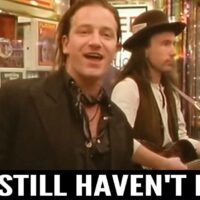
  • U2 – I Still Haven’t Found What I’m Looking For

    U2 – I Still Haven’t Found What I’m Looking For

    U2 – I Still Haven’t Found What I’m Looking For: The Search That Never Ends

    When Rock Music Reached for Heaven

    Some songs don’t just play — they lift you. U2’s “I Still Haven’t Found What I’m Looking For” is one of those rare songs that feels spiritual, human, and universal all at once.

    Released in 1987 on the band’s landmark album The Joshua Tree, it’s not a declaration of faith or doubt — it’s both. The first time I heard it, I felt like I was standing under a vast desert sky, searching for something I couldn’t quite name.

    The Soul of The Joshua Tree

    By the time U2 recorded The Joshua Tree, they had already conquered stadiums. But with this album, they wanted something deeper — a sound that connected the spiritual and the earthly. “I Still Haven’t Found What I’m Looking For” became the emotional centerpiece of that vision.

    Bono has described it as a “gospel song with a restless spirit,” and that’s exactly what it is — part rock anthem, part hymn, built on Larry Mullen Jr.’s steady heartbeat of a rhythm and The Edge’s shimmering guitar lines.

    The Lyrics: Searching for Meaning

    What makes the song timeless is its honesty. Bono sings about chasing love, transcendence, and truth — yet always feeling like it’s just out of reach.

    “I have climbed the highest mountains, I have run through the fields / Only to be with you.”

    There’s devotion here, but also vulnerability. It’s about longing without resolution — and that’s why it resonates so deeply. The search itself becomes the destination.

    The Music: Simplicity with Soul

    Musically, “I Still Haven’t Found What I’m Looking For” is deceptively simple — a slow, steady groove with layers that shimmer and rise like sunlight breaking through clouds.

    Adam Clayton’s bass line grounds the song, The Edge’s chiming guitar adds space and atmosphere, and Bono’s voice carries both grit and grace. It’s the sound of a band completely in sync, channeling something far bigger than themselves.

    The Gospel Connection

    When U2 performed the song live with a gospel choir for Rattle and Hum in 1988, it revealed its true soul. The spiritual undertones became explicit — the song transformed from a search into a celebration of that search.

    It wasn’t about finding answers. It was about embracing the mystery.

    A Fan’s Reflection

    For me, “I Still Haven’t Found What I’m Looking For” has always been one of those songs that hits differently depending on where you are in life. When I was young, it sounded like ambition. Later, it sounded like longing. Now, it feels like peace — the comfort of knowing the journey never really ends.

    I remember hearing it live once, surrounded by tens of thousands of people, everyone singing that chorus together. It was unity, hope, and yearning — all rolled into one unforgettable moment.

    Why I Still Haven’t Found What I’m Looking For Still Matters

    Decades after its release, this song remains one of U2’s defining achievements. It bridges rock, gospel, and spirituality in a way no other band has quite managed since.

    For me, it’s not about what you’re looking for — it’s about knowing that searching is what keeps you alive. That’s what makes it timeless.

  • U2 – Sweetest Thing

    U2 – Sweetest Thing

    U2 – Sweetest Thing: A Love Song with a Backstory

    The First Time I Heard Sweetest Thing

    The first time I heard U2’s “Sweetest Thing,” I didn’t know the story behind it. All I knew was that it sounded different from the band’s big stadium anthems. No politics, no heavy drama — just Bono singing a playful, heartfelt tune that felt more like a personal confession than a sermon from the stage.

    And then, when I learned the backstory? Let’s just say it made the song hit even harder.

    The Story Behind the Song

    “Sweetest Thing” wasn’t originally written to be a hit single. Bono wrote it in 1987 as an apology to his wife, Ali Hewson, after forgetting her birthday during the recording sessions for The Joshua Tree. Imagine that — you’re so deep in making one of the greatest rock albums of all time that you forget your wife’s birthday. Writing a song might be the only way to make up for that.

    The track was released as the B-side to “Where the Streets Have No Name.” It was catchy, charming, and totally unlike the heavier material U2 was known for. But it didn’t get its moment in the sun until more than a decade later.

    The 1998 Re-Release

    In 1998, U2 revisited “Sweetest Thing” for their compilation album The Best of 1980–1990. They re-recorded it with a richer arrangement, complete with strings, keyboards, and a polished production that gave the song new life.

    This time, it wasn’t just a B-side — it was a single. And it worked. The re-released version climbed the charts around the world, hitting No. 1 in Ireland and Canada, and breaking into the Top 10 in the UK.

    The Music Video: Bono’s Public Apology

    The music video only added to the charm. Bono rides in a horse-drawn carriage through Dublin, with Ali herself making an appearance. Along the way, the carriage passes jugglers, fire-eaters, children’s choirs, and even the band members themselves. It’s whimsical, funny, and — let’s be honest — about as grand a public apology as you can make.

    As a fan watching it for the first time, I remember thinking: Only Bono could turn forgetting a birthday into a worldwide hit single.

    A Fan’s Reflection

    What I love most about “Sweetest Thing” is how personal it feels. U2 are famous for their big, sweeping statements — about war, faith, politics, the human condition. But here, Bono lets the mask slip. It’s not about saving the world; it’s about saving face with the person who matters most to him.

    And maybe that’s why fans love it so much. It’s simple, relatable, and a reminder that even rock stars mess up — and sometimes have to write a song to dig themselves out.

    Why Sweetest Thing Still Matters

    More than 30 years after it was first written, “Sweetest Thing” still feels fresh. It’s playful, melodic, and one of the most heartfelt love songs in U2’s catalog.

    For me, it’s proof that not every great track has to be born out of revolution or tragedy. Sometimes, the sweetest songs come from everyday mistakes — and the love that forgives them.

  • U2 – Pride (In The Name Of Love)

    U2 – Pride (In The Name Of Love)

    U2 – “Pride (In The Name Of Love)”: A Song for the Dreamer and the Fighter

    Released in 1984 on their breakthrough album The Unforgettable Fire, “Pride (In the Name of Love)” marked a bold new chapter for U2. It combined the band’s spiritual urgency, political conscience, and musical ambition into one of the most stirring anthems of the era. What began as a song about American civil rights leader Dr. Martin Luther King Jr. quickly became something even larger — a global tribute to anyone who has stood up for love and justice in the face of hatred.

    With its driving rhythm, echoing guitar textures, and Bono’s impassioned vocals, “Pride” wasn’t just a hit — it was a statement of purpose.


    The Sound: Echoes of Idealism and Defiance

    From the opening riff, The Edge’s guitar shimmers with delay and resonance, creating a wide-open sonic space that has since become U2’s signature sound. It’s atmospheric but propulsive — as if the song itself is marching toward something righteous.

    • Adam Clayton’s bassline and Larry Mullen Jr.’s drums provide a tight, urgent groove that feels almost military in its precision — fitting for a song about moral courage.
    • Bono’s vocals, clear and emotional, rise and fall with conviction. He doesn’t just sing the lyrics — he testifies.

    The production, handled by Brian Eno and Daniel Lanois, introduced a more ambient, textured style for the band — setting the stage for what would later become fully realized on The Joshua Tree.


    The Lyrics: Love, Sacrifice, and Legacy

    “One man come in the name of love / One man come and go…”

    Bono’s lyrics are deceptively simple, but loaded with symbolism and passion. “Pride” was originally meant to address broader civil rights themes, but it ultimately centered on Dr. Martin Luther King Jr. — particularly his martyrdom.

    “Early morning, April 4 / Shot rings out in the Memphis sky…”

    While this line famously includes an error (King was assassinated in the evening, not morning), Bono has acknowledged the mistake and stood by the song’s emotional truth. It’s not about precision — it’s about impact.

    At its core, “Pride” is a tribute to those who fight for change without violence. It doesn’t just honor King — it echoes the spirit of all who choose dignity over vengeance, and love over hate.


    Reception and Chart Success

    “Pride (In the Name of Love)” was U2’s first major international hit, charting:

    • #3 in the UK
    • Top 40 in the U.S.
    • A #1 hit in countries like New Zealand and Ireland

    More importantly, it became a concert staple and cultural touchstone. Its blend of political engagement and emotional power helped define U2 as more than a rock band — they became messengers, using music as a platform for moral conviction.


    Legacy: More Than a Protest Song

    “Pride” is one of the most enduring songs in U2’s catalog, regularly featured in their live shows, especially during moments of social or political unrest. It remains relevant because it doesn’t just point to the past — it speaks to the now.

    It has been used in countless films, documentaries, and tribute events. The title alone — In the Name of Love — has become a universal mantra for resistance, hope, and unity.


    Final Thoughts

    “Pride (In the Name of Love)” is a song that marches.
    It marches through history.
    It marches through injustice.
    And it marches on — in the name of every person who’s ever fought for something bigger than themselves.

    It’s not just about Martin Luther King Jr.
    It’s about what you believe in.
    And how far you’re willing to go for it.

  • U2 – One

    U2 – One

    U2 – “One”: A Hymn for a Broken World

    When U2 released “One” in 1991 as part of their landmark Achtung Baby album, they didn’t just write a hit—they penned a song that has since become a modern rock hymn, a meditation on love, forgiveness, unity, and the cracks that run through all of it.

    Born out of conflict and near collapse, “One” is paradoxical by design: tender but tense, hopeful but haunted. It asks whether people can stay together while coming apart—and in doing so, it captured the bruised spirit of an uncertain new decade.

    The Sound: Lush, Lonesome, and Lean

    Musically, “One” is elegant in its restraint. The guitar part—played by The Edge—is almost hymn-like, floating over Adam Clayton’s subdued bass line and Larry Mullen Jr.’s heartbeat of a drum rhythm. The whole track feels like a slow breath in a moment of reflection.

    There’s no flash, no bombast—just atmosphere, emotion, and space. Brian Eno and Daniel Lanois’s production choices allow the song to unfold organically, as if it’s discovering itself line by line.

    The Voice: Bono’s Broken Prayer

    Then there’s Bono’s vocal, which feels less like a performance and more like a confession. He doesn’t sing to impress—he sings like someone trying to figure things out in real time.

    “Is it getting better? / Or do you feel the same?”

    From the opening line, he invites the listener into a difficult, deeply human conversation. As the song builds, his voice rises—not with rage, but with a mixture of frustration and longing, as if begging the question:

    “We’re one, but we’re not the same—so we get to carry each other?”

    It’s not a command. It’s a challenge. A plea. A paradox.

    The Lyrics: Unity Through Struggle

    “One” is a song rife with contradictions—the idea that people can be bonded while still breaking apart, that love can hurt as much as it heals, and that unity isn’t always agreement.

    “Did I ask too much? / More than a lot? / You gave me nothing, now it’s all I got.”

    The song has been interpreted in many ways: as a relationship in crisis, a band on the brink, a message of unity in the face of global division, or even a conversation with God. It contains multitudes, and that’s exactly why it continues to resonate.

    It’s a love song for people who know love is complicated.
    It’s a protest song for a world that wants to believe in something better.

    The Backstory: A Song That Saved the Band

    The birth of “One” came during a moment of intense tension within U2. During the fractious Achtung Baby sessions in Berlin, the band was struggling to find direction—artistically and personally. When The Edge brought in a simple chord progression during a jam session, something clicked.

    The mood shifted. They followed the spark.
    And from that session, “One” emerged—a song that, by all accounts, helped keep U2 together.

    It would go on to become one of their biggest and most enduring songs, touching millions, covered by countless artists, and used in humanitarian causes, benefit concerts, and even wedding ceremonies.

    Legacy: Universal, Yet Unresolved

    Since its release, “One” has become more than just a U2 song. It’s a cultural touchstone. It’s been adopted by charities, sung in times of mourning, blasted in arenas, whispered through headphones on long walks.

    It feels spiritual without being religious. Personal without being confessional. Political without being partisan.

    And maybe that’s its genius: it leaves space for you. It’s not about telling you what to feel—it’s about asking you what it means to be together, in spite of everything.

    Final Thoughts

    “One” isn’t an answer. It’s a question set to music.
    It aches with hope. It stumbles toward truth. It dares to believe that connection matters, even when it’s hard.

    It doesn’t promise a happy ending.
    It just says: “Don’t give up on each other. Not yet.”

  • U2 – I Still Haven’t Found What I’m Looking For

    U2 – I Still Haven’t Found What I’m Looking For

    U2

    U2, the iconic Irish rock band formed in 1976, has left an indelible mark on the music world. With their unique blend of classic rock and post-punk influences, the band has crafted a sound that is both innovative and instantly recognizable. The driving force behind U2’s sonic identity is The Edge’s distinctive guitar work. This article will explore how The Edge’s approach to guitar playing bridges the gap between classic rock and post-punk, and how his style has shaped the band’s musical legacy.

    The Edge’s Roots in Classic Rock

    Born David Howell Evans, The Edge grew up listening to a diverse range of music, including classic rock artists like Led Zeppelin, The Who, and Jimi Hendrix. The influence of these legendary guitarists is evident in The Edge’s playing style, which often features powerful riffs, memorable solos, and a strong sense of melody. However, it’s the way he incorporates these classic rock elements with post-punk sensibilities that sets him apart from his peers.

    Incorporating Post-Punk Influences

    The late 1970s and early 1980s saw the rise of post-punk, a genre characterized by its experimental approach to rock music, often incorporating elements of punk, new wave, and art rock. Bands like Joy Division, Gang of Four, and Siouxsie and the Banshees made use of unconventional guitar techniques, such as unconventional chord voicings, heavy use of effects, and a focus on texture and atmosphere rather than traditional riff-based rock.
    The Edge’s guitar work seamlessly integrates these post-punk elements, helping to create a sound that is entirely U2’s own. His heavy use of delay effects, minimalist approach to riffs, and innovative use of textures and harmonics serve to bridge the gap between classic rock and post-punk.

    The Signature Sound of U2

    One of the defining aspects of U2’s sound is The Edge’s masterful use of delay. By utilizing this effect, he creates a vast sonic landscape that gives the band’s music a sense of space and depth. Songs like “Where the Streets Have No Name” and “With or Without You” showcase his skill in crafting complex, layered guitar parts that build upon each other to create a rich tapestry of sound.
    In addition to his use of effects, The Edge’s minimalist approach to riffs and melodies sets him apart from his classic rock predecessors. Rather than relying on flashy solos and intricate riffs, The Edge often opts for simple, repetitive patterns that provide a solid foundation for the rest of the band to build upon. This can be heard in tracks like “I Will Follow” and “Pride (In the Name of Love),” where his guitar work serves as a driving force that propels the music forward.

    Conclusion

    The Edge’s unique approach to guitar playing has played a crucial role in defining U2’s sound and setting them apart from other rock bands. By merging classic rock techniques with post-punk experimentation, he has created a style that is both familiar and innovative. As U2 continues to evolve and push musical boundaries, The Edge’s distinctive guitar work remains a key component of their enduring appeal and success.