Fb-Button
John Lee Hooker Archives - Page 3 of 5 - I Love Blues Guitar
I Love Blues Guitar

Tag: John Lee Hooker

  • John Lee Hooker – Tupelo Blues

    John Lee Hooker – Tupelo Blues

    John Lee Hooker

    John Lee Hooker was a notable American blues singer, guitarist and songwriter. His fame rose when he performed electric guitar adaptations of Delta Blues. He also has this inclination to insert early North Mississippi Hill country blues and talking blues into his music with a genius twist.

    He is often compared in greatness to B. B. King, who was also born in Mississippi, just like Hooker. King’s contribution to Delta blues was a comprehensive guitar technique that harmonized blues with components of jazz, rhythm and blues and other popular music genres.

    But John Lee Hooker created a style of his own, in contrast, by retaining a pure and traditional approach of the Delta blues. In the postwar, he achieved more success, doing a crossover, using vocals with solo guitar. This was the style of earlier Delta players which he adopted, used to the hilt in his hit record, Boogie Chillen, in 1948.

    The later releases of John Lee like I’m in the Mood (1951), Boom Boom (1962) and The Healer (1989), incorporated soul and rock music.

    When Hooker was starting out in his musical career, he performed and recorded with rock musicians. One of his earliest partnerships was with The Groundhogs, a British blues rock band.

    Hooker and Canned Heat

    In 1970, he played adaptations of his songs with the group Canned Heat, an American blues and boogie rock band. The result was the joint album Hooker ‘n Heat.

    At his best, only with his electric guitar strapped on him, Hooker describes his musical style:

    The display of aggressive energy in fast boogies and also an ample show of intensity for stark and slow blues. A back to the basics guitarist – playing simple harmonies, pentatonic scales and also one chord modal harmonic structures.

    John Lee Hooker toured expansively beginning the 1950s and he also made appearances in movies like The Blues Brothers (1980) and The Color Purple (1985). He was inducted into the Rock and Roll Hall of Fame in 1991 and had a huge influence on bands such as The Animals and The Rolling Stones.

    John Lee Hooker recorded more than 100 albums. Among them was The Healer (1989) which had appearances by Carlos Santana and Bonnie Raitt. Other notable albums are The Best of Friends (1998) and Grammar Award winner Don’t Look Back (1997).

    From the depths of the Internet, another recording of this song, this time from 1960. Look how young John Lee is here.

  • John Lee Hooker & Santana – The Healer

    John Lee Hooker & Santana – The Healer

    The duo John Lee Hooker, and Santana causes always goosebumps. Although Hooker only sings here, a melodic blues licks by Santana create an unusual atmosphere. The song comes from the album “Chill out”, which is excellent to cool off on a hot afternoon or recall the heat of summer when the winter is outside.

    John Lee Hooker

    Hooker was born in 1917. A boogie genius, a great blues star. His expressive style has gained a large group of admirers since his record debut in 1959.

    During the late seventies and eighties, John Lee toured the United States and Europe regularly. His appearance in the iconic movie “Blues Brothers” once again took his charts, and at the age of 72, John Lee Hooker released the biggest album of his career, “The Healer”. He picked up the Grammy for it in 1989 and has sold over a million copies.

    He played various types of blues, his work is a lot of fascinating musical journeys. Several songs were commercially successful in the charts, incl. “Boom, Boom” or “Chill Out”. John Lee Hooker died in 2001.

    Santana

    Carlos Santana – legendary musician, guitar virtuoso. He was born in Mexico, Autlan de Navarro, on July 20, 1947. In the early 1960s, he came to the USA and settled in San Francisco. A few years later, in 1966, the musician founded a band called Santana Blues Band, which still exists today as Santana, creates rock music inspired by Latin American folklore and blues.
    In the course of over 30 years of career, with his band, he has released more than 20 albums and recorded 7 solo albums sold in a total of over 50 million copies, the band also played concerts for over 30 million fans. The musician has won countless awards and distinctions, including in 1998 he was inducted into the Rock’n’Roll Hall Of Fame (Rock’n’Roll Hall of Fame).

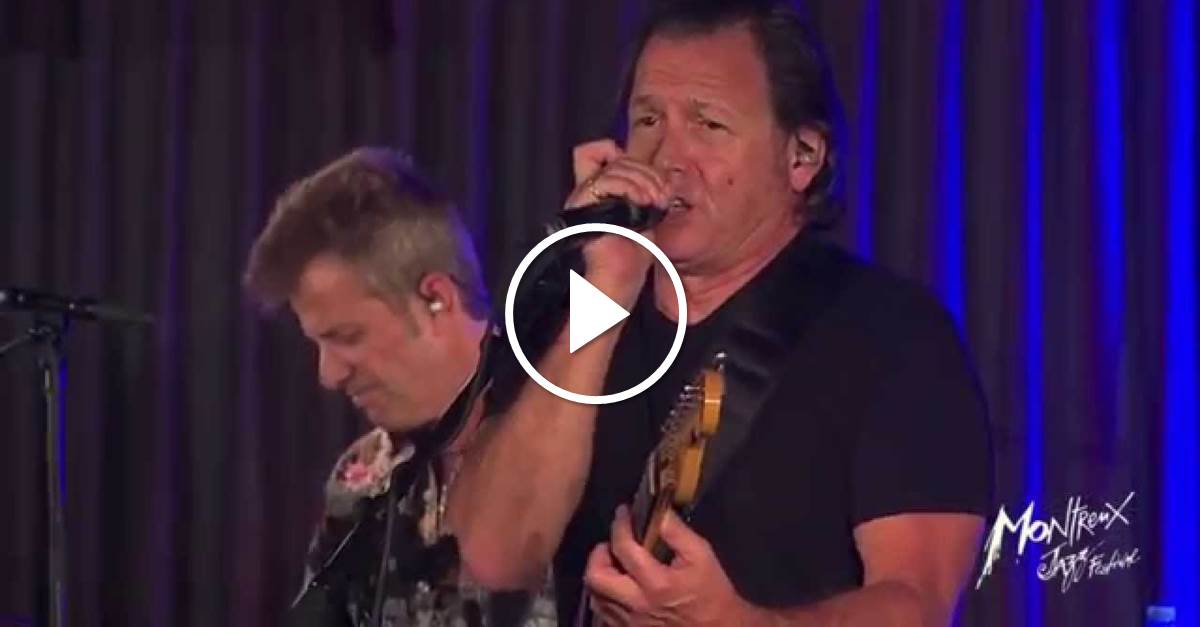
  • Tommy Castro – Serves Me Right To Suffer

    Tommy Castro – Serves Me Right To Suffer

    Tommy Castro – Serves Me Right To Suffer

    Tommy Castro: guitars & vocals,
    Randy McDonald: bass,
    James Pace: keyboards,
    Bowen Brown: drums.

    Tommy is an American blues, R&B and rock guitarist and singer. He has been recording since the mid-1990s. Born in San Jose, California in 1955, He first picked up a guitar at age 10. According to all the press and hype and hoopla for a time during the 1990s, Tommy Castro was pegged as the next big star of the blues.

    His music has taken him from local stages to national and international touring. His music sits squarely at the center of an evolving tradition of rock and blues.

    In 2001 and 2002, B.B. King asked Castro to open his summer concert tours. Castro received an open invitation to join King on stage for the nightly finale.

    In May 2010, The Blues Foundation awarded Castro multiple Blues Music Award honors for Blues Male Artist of the Year, Contemporary Blues Album of the Year, B.B. King Entertainer of the Year, and with his band, Band of the Year.

    Albums

    1994: No Foolin (Saloon)
    1995: Exception to the Rule (Blind Pig)
    1997: Can’t Keep a Good Man Down (Blind Pig)
    1998: Right as Rain (Blind Pig)
    2000: Live at the Fillmore (Blind Pig)
    2001: Guilty of Love (33rd Street)
    2001: Mystic Theater Live promotional EP (33rd Street)
    2003: Gratitude (Heart And Soul) – now on Oarfin
    2003: The Essential (Janblues)
    2003: Triple Trouble (Telarc)
    2005: Soul Shaker (Blind Pig)
    2007: Painkiller (Blind Pig)
    2008: Command Performance: Legendary Rhythm & Blues Revue (Delta Groove)
    2009: Hard Believer (Alligator)
    2011: Tommy Castro Presents The Legendary Rhythm & Blues Revue! (Alligator)
    2013: Greedy/That’s All I Got (7″ single) (Alligator)
    2014: The Devil You Know (Alligator)
    2015: Method To My Madness (Alligator)
    2016: The Very Best of Tommy Castro (Blind Pig)
    2017: Stompin’ Ground (Alligator)
    2019: Killin’ It Live (Alligator)

    Thank You

    We appreciate your time and dedication to reading our article. For more of the finest blues guitar music, make sure to follow our Facebook page, “I Love Blues Guitar”. We share exceptional selections every day. Thank you once again for your continued support and readership.

  • John Lee Hooker – Serves Me Right To Suffer

    John Lee Hooker – Serves Me Right To Suffer

    John Lee Hooker

    John Lee Hooker was a notable American blues singer, guitarist and songwriter. His fame rose when he performed electric guitar adaptations of Delta Blues. He also has this inclination to insert early North Mississippi Hill country blues and talking blues into his music with a genius twist.

    He is often compared in greatness to B. B. King, who was also born in Mississippi, just like Hooker. King’s contribution to Delta blues was a comprehensive guitar technique that harmonized blues with components of jazz, rhythm and blues and other popular music genres.

    But John Lee Hooker created a style of his own, in contrast, by retaining a pure and traditional approach of the Delta blues. In the postwar, he achieved more success, doing a crossover, using vocals with solo guitar. This was the style of earlier Delta players which he adopted, used to the hilt in his hit record, Boogie Chillen, in 1948.

    The later releases of John Lee like I’m in the Mood (1951), Boom Boom (1962) and The Healer (1989), incorporated soul and rock music.

    When Hooker was starting out in his musical career, he performed and recorded with rock musicians. One of his earliest partnerships was with The Groundhogs, a British blues rock band.

    In 1970, he played adaptations of his songs with the group Canned Heat, an American blues and boogie rock band. The result was the joint album Hooker ‘n Heat.

    At his best, only with his electric guitar strapped on him, Hooker describes his musical style:

    The display of aggressive energy in fast boogies and also an ample show of intensity for stark and slow blues. A back to the basics guitarist – playing simple harmonies, pentatonic scales and also one chord modal harmonic structures.

    John Lee Hooker toured expansively beginning the 1950s and he also made appearances in movies like The Blues Brothers (1980) and The Color Purple (1985). He was inducted into the Rock and Roll Hall of Fame in 1991 and had a huge influence on bands such as The Animals and The Rolling Stones.

    John Lee Hooker recorded more than 100 albums. Among them was The Healer (1989) which had appearances by Carlos Santana and Bonnie Raitt. Other notable albums are The Best of Friends (1998) and Grammar Award winner Don’t Look Back (1997).

    Our quality blues t-shirts are perfect for your next music festival, concert or jam, and make great gifts.

    blues music t-shirts

  • John Lee Hooker – Boogie Chillen

    John Lee Hooker – Boogie Chillen

    John Lee Hooker – Boogie Chillen with Roy Rogers in concert 1992 Berkely.

    John Lee Hooker was born in 1917. The genius of the boogie, the big star of blues music. His expressive style since his debut album in 1959, has gained a great bunch of admirers.

    He played different variations of the blues, his works are many fascinating musical journeys. A few songs ended up with commercial chart success, including “Boom, Boom” or “Chill Out”.

    John Lee Hooker

    John Lee Hooker was a notable American blues singer, guitarist and songwriter. His fame rose when he performed electric guitar adaptations of Delta Blues. He also has this inclination to insert early North Mississippi Hill country blues and talking blues into his music with a genius twist.

    He is often compared in greatness to B. B. King, who was also born in Mississippi, just like Hooker. King’s contribution to Delta blues was a comprehensive guitar technique that harmonized blues with components of jazz, rhythm and blues and other popular music genres.

    But John Lee Hooker created a style of his own, in contrast, by retaining a pure and traditional approach of the Delta blues. In the postwar, he achieved more success, doing a crossover, using vocals with solo guitar. This was the style of earlier Delta players which he adopted, used to the hilt in his hit record, Boogie Chillen, in 1948.

    The later releases of John Lee like I’m in the Mood (1951), Boom Boom (1962) and The Healer (1989), incorporated soul and rock music.

    When Hooker was starting out in his musical career, he performed and recorded with rock musicians. One of his earliest partnerships was with The Groundhogs, a British blues rock band.

    In 1970, he played adaptations of his songs with the group Canned Heat, an American blues and boogie rock band. The result was the joint album Hooker ‘n Heat.

    At his best, only with his electric guitar strapped on him, Hooker describes his musical style:

    The display of aggressive energy in fast boogies and also an ample show of intensity for stark and slow blues. A back to the basics guitarist – playing simple harmonies, pentatonic scales and also one chord modal harmonic structures.

    John Lee Hooker toured expansively beginning the 1950s and he also made appearances in movies like The Blues Brothers (1980) and The Color Purple (1985). He was inducted into the Rock and Roll Hall of Fame in 1991 and had a huge influence on bands such as The Animals and The Rolling Stones.

    John Lee Hooker recorded more than 100 albums. Among them was The Healer (1989) which had appearances by Carlos Santana and Bonnie Raitt. Other notable albums are The Best of Friends (1998) and Grammar Award winner Don’t Look Back (1997).

    blues music t-shirts

  • John Lee Hooker – One Bourbon One Scotch One Beer

    John Lee Hooker – One Bourbon One Scotch One Beer

    John Lee Hooker

    John Lee Hooker was a notable American blues singer, guitarist and songwriter. His fame rose when he performed electric guitar adaptations of Delta Blues. He also has this inclination to insert early North Mississippi Hill country blues and talking blues into his music with a genius twist.

    He is often compared in greatness to B. B. King, who was also born in Mississippi, just like Hooker. King’s contribution to Delta blues was a comprehensive guitar technique that harmonized blues with components of jazz, rhythm and blues and other popular music genres.

    But John Lee Hooker created a style of his own, in contrast, by retaining a pure and traditional approach of the Delta blues. In the postwar, he achieved more success, doing a crossover, using vocals with solo guitar. This was the style of earlier Delta players which he adopted, used to the hilt in his hit record, Boogie Chillen, in 1948.

    The later releases of John Lee like I’m in the Mood (1951), Boom Boom (1962) and The Healer (1989), incorporated soul and rock music.

    When Hooker was starting out in his musical career, he performed and recorded with rock musicians. One of his earliest partnerships was with The Groundhogs, a British blues rock band.

    In 1970, he played adaptations of his songs with the group Canned Heat, an American blues and boogie rock band. The result was the joint album Hooker ‘n Heat.

    At his best, only with his electric guitar strapped on him, Hooker describes his musical style:

    The display of aggressive energy in fast boogies and also an ample show of intensity for stark and slow blues. A back to the basics guitarist – playing simple harmonies, pentatonic scales and also one chord modal harmonic structures.

    John Lee Hooker toured expansively beginning the 1950s and he also made appearances in movies like The Blues Brothers (1980) and The Color Purple (1985). He was inducted into the Rock and Roll Hall of Fame in 1991 and had a huge influence on bands such as The Animals and The Rolling Stones.

    John Lee Hooker recorded more than 100 albums. Among them was The Healer (1989) which had appearances by Carlos Santana and Bonnie Raitt. Other notable albums are The Best of Friends (1998) and Grammar Award winner Don’t Look Back (1997).

    blues music t-shirts

  • John Lee Hooker & Ry Cooder – Hobo Blues

    John Lee Hooker & Ry Cooder – Hobo Blues

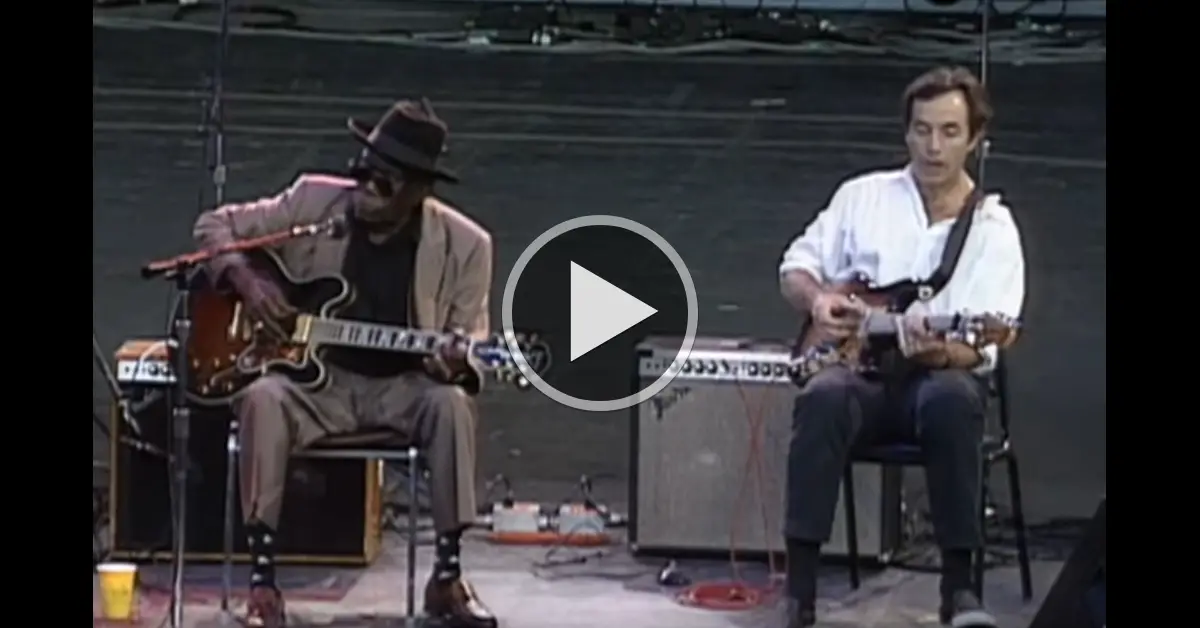
    John Lee Hooker and Ry Cooder playing blues together in shoreline Amphitheatre 10/10/1992. Ry Cooder slide guitar incredibly fits with John Lee singing and playing.

    John Lee Hooker

    John Lee Hooker was a notable American blues singer, guitarist and songwriter. His fame rose when he performed electric guitar adaptations of Delta Blues. He also has this inclination to insert early North Mississippi Hill country blues and talking blues into his music with a genius twist.

    He is often compared in greatness to B. B. King, who was also born in Mississippi, just like John Lee Hooker. King’s contribution to Delta blues was a comprehensive guitar technique that harmonized blues with components of jazz, rhythm and blues and other popular music genres.

    But John Lee Hooker created a style of his own, in contrast, by retaining a pure and traditional approach of the Delta blues. In the postwar, he achieved more success, doing a crossover, using vocals with solo guitar. This was the style of earlier Delta players which he adopted, used to the hilt in his hit record, Boogie Chillen, in 1948.

    The later releases of John Lee Hooker like I’m in the Mood (1951), Boom Boom (1962) and The Healer (1989), incorporated soul and rock music.

    When John Lee Hooker was starting out in his musical career, he performed and recorded with rock musicians. One of his earliest partnerships was with The Groundhogs, a British blues-rock band.

    In 1970, he played adaptations of his songs with the group Canned Heat, an American blues and boogie rock band. The result was the joint album Hooker ‘n Heat.

    At his best, only with his electric guitar strapped on him, Hooker describes his musical style:

    The display of aggressive energy in fast boogies and also an ample show of intensity for stark and slow blues. A back to the basics guitarist – playing simple harmonies, pentatonic scales and also one-chord modal harmonic structures.

    John Lee Hooker toured expansively beginning the 1950s and he also made appearances in movies like The Blues Brothers (1980) and The Color Purple (1985). He was inducted into the Rock and Roll Hall of Fame in 1991 and had a huge influence on bands such as The Animals and The Rolling Stones.

    John Lee Hooker recorded more than 100 albums. Among them was The Healer (1989) which had appearances by Carlos Santana and Bonnie Raitt. Other notable albums are The Best of Friends (1998) and Grammar Award winner Don’t Look Back (1997).
    Two of his songs, “Boogie Chillen” and “Boom Boom”, are included in the Rock and Roll Hall of Fame’s list of the 500 Songs That Shaped Rock and Roll. “Boogie Chillen” is also included in the Recording Industry Association of America’s list of the “Songs of the Century”.

    Ryland Peter “Ry” Cooder

    (born March 15, 1947) is an American musician. He is known for his slide guitar work, his interest in roots music from the United States, and, more recently, his collaborations with traditional musicians from many countries.

    His solo work has been eclectic, encompassing folk, blues, Tex-Mex, soul, gospel, rock, and much else. He has collaborated with many musicians, notably including Captain Beefheart, Ali Farka Touré, Eric Clapton, The Rolling Stones, Van Morrison, Neil Young, Randy Newman, David Lindley, The Chieftains, and The Doobie Brothers. He briefly formed a band named Little Village.

    Below is another version of this song performed by both artists.

  • John Lee Hooker – Rock Me Baby

    John Lee Hooker – Rock Me Baby

    John Lee Hooker

    He was beloved worldwide as the king of the endless boogie, a genuine blues superstar whose droning, hypnotic one-chord grooves were at once both ultra primitive and timeless.

    John recorded in a great many more styles than that over a career that stretched across more than half a century. Those who’d learned from him and appreciated his music’s basic truths joined him with love and sensitivity on his last, best-selling records.

    The earliest musical influence on John Lee was his stepfather William Moore – a blues musician who taught him to play the guitar. It was to him later that John attributed his unique style of playing the instrument.
    In the early 1940’s, Hooker moved from Mississippi to Detroit, where he was a watchman at car factories by day, and, like many other Delta visitors, at night, he entertained friends and neighbors by playing and singing at home parties. Thanks to these concerts, “The Hook” gained fans all over the city.

    The career that had begun at Detroit house rent parties ended fifty years later with platinum records and a star on the Hollywood Walk of Fame. Unlike so many bluesmen of old, John Lee Hooker died with wealth and acclaim in equal measure.

    During the late seventies and eighties, John Lee toured the United States and Europe regularly. His appearance in the cult movie “Blues Brothers” once again took his charts, and at the age of 72, John Lee Hooker released the biggest album of his career, “The Healer”. He picked up the Grammy for it in 1989 and has sold over a million copies.

    When John Lee Hooker entered the age of 70, he was suddenly at the most successful stage in his career – rediscovered and full of energy as always, touring and recording until his death in 2001.

    Check our blues music t-shirts CLICK HERE

  • John Lee Hooker and Carlos Santana – Chill Out

    John Lee Hooker and Carlos Santana – Chill Out

    Two Legends, One Unforgettable Sound: Unraveling the Magic of John Lee Hooker and Carlos Santana’s “Chill Out”

    When the worlds of blues and rock collide, magic happens. And when two of the most iconic musicians of our time – John Lee Hooker and Carlos Santana – come together, that magic takes on a life of its own. Today, we dive deep into the extraordinary collaboration between these two virtuosos, perfectly exemplified by the soulful rendition of “Chill Out.”

    John Lee Hooker, the “King of the Boogie,” was a profound influence on the blues genre. Known for his distinctive vocal and rhythmic guitar playing, Hooker’s music exuded raw emotion and an undeniable authenticity that continues to resonate with audiences even today.

    Carlos Santana, on the other hand, is a titan of rock and Latin American music. His blend of rock, salsa, and jazz fusion has produced some of the most recognized sounds in the history of music. Santana’s soulful guitar melodies and the unique tonality he brings to the table have made him a beloved figure worldwide.

    Their collaboration on the song “Chill Out” is nothing short of extraordinary. The track, an undeniable blues classic, is a testament to the musicianship and creativity of both artists. The song is a vibrant tapestry of bluesy rhythms, haunting vocals, and fiery guitar solos – a mesmerizing fusion of the gritty, raw emotion of blues with the energetic pulse of rock.

    From the opening notes, it’s clear that “Chill Out” is a musical journey. The song begins with a characteristic blues guitar line from Hooker, setting a somber and soulful mood. It’s not long before Santana joins in with his guitar, his notes dancing around Hooker’s with a Latin-infused rhythm that adds an intoxicating energy to the track.

    Hooker’s deep, resonant voice is spellbinding. His soulful rendition of the lyrics, filled with timeless wisdom and streetwise allure, delivers a punch of raw, unadulterated blues. Santana complements this perfectly, his guitar responding to Hooker’s voice, sometimes mirroring it, sometimes challenging it, but always in a harmony that highlights the unique strengths of both artists.

    The highlight of “Chill Out” is undoubtedly the guitar solos. Both Santana and Hooker get a chance to shine here. Hooker’s solo is filled with raw emotion, his guitar crying out in a primal blues language that needs no translation. Santana, with his fiery Latin-rock style, takes the energy to new heights, his guitar wailing and crying with a passion that is unmistakably Santana.

    This collaboration between Hooker and Santana in “Chill Out” is a stunning reminder of the power of music to bridge genres and generations. It’s a rare treat to hear two masters of their respective crafts come together to create something truly special. “Chill Out” is not just a song; it’s an experience, a journey into the heart and soul of blues and rock, guided by two of the most iconic musicians of our time. As we listen to this track, we’re reminded of the timeless beauty of music, the universal language that brings us all together.

    So here’s to John Lee Hooker and Carlos Santana – for the magic they’ve created, for the inspiration they’ve provided, and for the musical journey they’ve invited us all to join. “Chill Out,” indeed.

    We appreciate your time and dedication in reading our article. For more of the finest blues guitar music, make sure to follow our Facebook page, “I Love Blues Guitar”. We share exceptional selections every day. Thank you once again for your continued support and readership.

  • John Lee Hooker – HoboBlues

    John Lee Hooker – HoboBlues

    John Lee Hooker

    John Lee Hooker was a notable American blues singer, guitarist and songwriter. His fame rose when he performed electric guitar adaptations of Delta Blues. He also has this inclination to insert early North Mississippi Hill country blues and talking blues into his music with a genius twist.

    He is often compared in greatness to B. B. King, who was also born in Mississippi, just like Hooker. King’s contribution to Delta blues was a comprehensive guitar technique that harmonized blues with components of jazz, rhythm and blues and other popular music genres.

    But John Lee Hooker created a style of his own, in contrast, by retaining a pure and traditional approach of the Delta blues. In the postwar, he achieved more success, doing a crossover, using vocals with solo guitar. This was the style of earlier Delta players which he adopted, used to the hilt in his hit record, Boogie Chillen, in 1948.

    The later releases of John Lee like I’m in the Mood (1951), Boom Boom (1962) and The Healer (1989), incorporated soul and rock music.

    When Hooker was starting out in his musical career, he performed and recorded with rock musicians. One of his earliest partnerships was with The Groundhogs, a British blues rock band.

    Hooker and Canned Heat

    In 1970, he played adaptations of his songs with the group Canned Heat, an American blues and boogie rock band. The result was the joint album Hooker ‘n Heat.

    At his best, only with his electric guitar strapped on him, Hooker describes his musical style:

    The display of aggressive energy in fast boogies and also an ample show of intensity for stark and slow blues. A back to the basics guitarist – playing simple harmonies, pentatonic scales and also one chord modal harmonic structures.

    John Lee Hooker toured expansively beginning the 1950s and he also made appearances in movies like The Blues Brothers (1980) and The Color Purple (1985). He was inducted into the Rock and Roll Hall of Fame in 1991 and had a huge influence on bands such as The Animals and The Rolling Stones.

    John Lee Hooker recorded more than 100 albums. Among them was The Healer (1989) which had appearances by Carlos Santana and Bonnie Raitt. Other notable albums are The Best of Friends (1998) and Grammar Award winner Don’t Look Back (1997).

    Hobo

    A hobo is a migratory worker or homeless vagabond, especially one who is impoverished. The term originated in the Western—probably Northwestern—United States around 1890. Unlike a “tramp”, who works only when forced to, and a “bum,” who does not work at all, a “hobo” is a traveling worker.

    H. L. Mencken, in his The American Language (4th ed., 1937), wrote:

    Tramps and hobos are commonly lumped together, but see themselves as sharply differentiated. A hobo or bo is simply a migratory laborer; he may take some longish holidays, but soon or late he returns to work. A tramp never works if it can be avoided; he simply travels. Lower than either is the bum, who neither works nor travels, save when impelled to motion by the police.

    John Lee Hooker – HoboBlues

    When I first thought to hobo’in, hobo’in
    I took a freight train to be my friend, oh Lord

    You know I hobo’d, hobo’d, hobo’d, hobo’d
    Hobo’d a long, long way from home, oh Lord