Fb-Button
John Lee Hooker Archives - Page 2 of 5 - I Love Blues Guitar
I Love Blues Guitar

Tag: John Lee Hooker

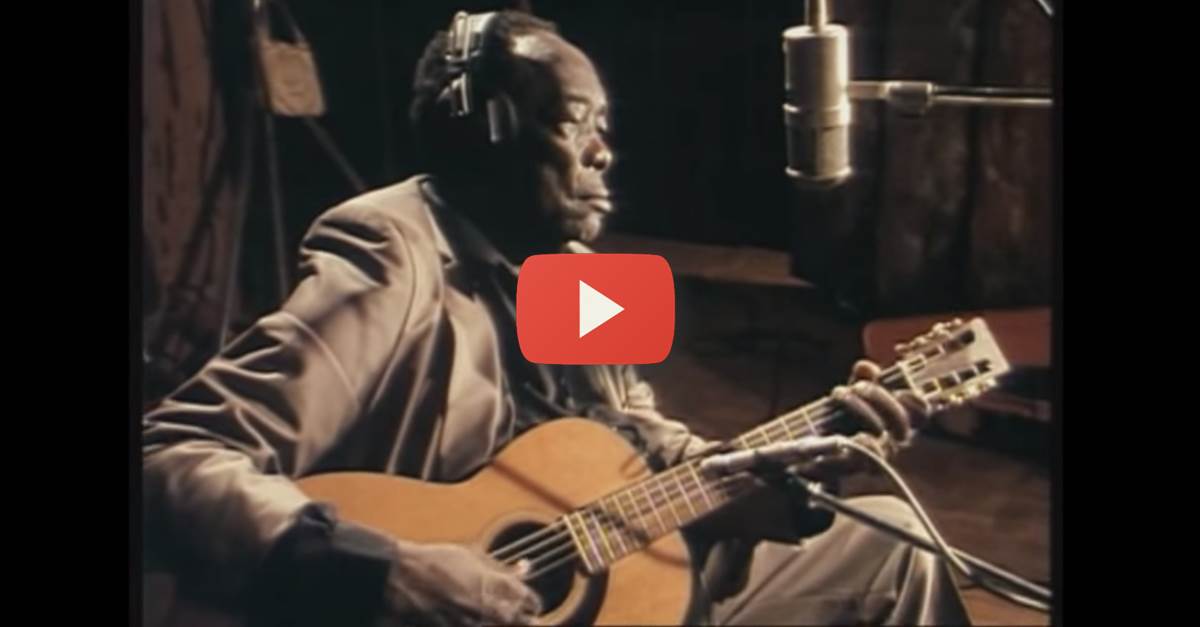
  • John Lee Hooker – Crawlin’ King Snake

    John Lee Hooker – Crawlin’ King Snake

    John Lee Hooker – Crawlin’ King Snake

    Engage your senses: Press play on the video, then stimulate your brain with the article.

    John Lee Hooker and Ry Cooder’s Timeless Blues

    On October 10, 1992, blues legend John Lee Hooker and renowned guitarist Ry Cooder took the stage at the Shoreline Amphitheatre in Mountain View, California. The performance was part of the All Our Colors – The Good Road Concert, a benefit to help Native American communities in need.

    John Lee Hooker was a towering figure in the world of blues. Born in Mississippi in 1917, he moved to Detroit in the 1940s and began recording for various labels, earning a reputation for his raw, authentic sound. Over the course of his six-decade career, he collaborated with a wide range of musicians and won numerous awards, including a Grammy Lifetime Achievement Award.

    Ry Cooder, too, was a respected musician with an impressive career. Born in Los Angeles in 1947, he began playing guitar at a young age and went on to become one of the most sought-after session players in the music industry. He was known for his eclectic taste and his ability to blend different genres and styles, making him a perfect match for Hooker’s bluesy sound.

    A Benefit Concert for Native American Communities

    During their performance at the Shoreline Amphitheatre, Hooker and Cooder played four songs, including “Lonely Man,” “Serves Me Right To Suffer,” “Hobo Blues,” and “Crawlin’ King Snake.” Despite the brevity of the set, the duo left a lasting impression on the crowd, their music a powerful testament to the enduring influence of the blues.

    As the concert drew to a close, Hooker and Cooder took their final bows, the crowd still cheering and applauding. The benefit was a great success, with funds raised to help Native American communities in need. The music of Hooker and Cooder played a vital role in making it a night to remember, a celebration of two of the greatest musicians of their time and a testament to the power of music to bring people together.

    Video

    Thank You

    We appreciate your time and dedication to reading our article. For more of the finest blues guitar music, make sure to follow our Facebook page, “I Love Blues Guitar”. We share exceptional selections every day. Thank you once again for your continued support and readership.

  • John Lee Hooker – This Is Hip

    John Lee Hooker – This Is Hip

    John Lee Hooker – This Is Hip
    John Lee Hooker – This Is Hip

    John Lee Hooker

    John Lee Hooker was a notable American blues singer, guitarist and songwriter. His fame rose when he performed electric guitar adaptations of Delta Blues. He also has this inclination to insert early North Mississippi Hill country blues and talking blues into his music with a genius twist.

    He is often compared in greatness to B. B. King, who was also born in Mississippi, just like Hooker. King’s contribution to Delta blues was a comprehensive guitar technique that harmonized blues with components of jazz, rhythm and blues and other popular music genres.

    But John Lee Hooker created a style of his own, in contrast, by retaining a pure and traditional approach of the Delta blues. In the postwar, he achieved more success, doing a crossover, using vocals with solo guitar. This was the style of earlier Delta players which he adopted, used to the hilt in his hit record, Boogie Chillen, in 1948.

    The later releases of John Lee like I’m in the Mood (1951), Boom Boom (1962) and The Healer (1989), incorporated soul and rock music.

    When Hooker was starting out in his musical career, he performed and recorded with rock musicians. One of his earliest partnerships was with The Groundhogs, a British blues rock band.

    Hooker and Canned Heat

    In 1970, he played adaptations of his songs with the group Canned Heat, an American blues and boogie rock band. The result was the joint album Hooker ‘n Heat.

    At his best, only with his electric guitar strapped on him, Hooker describes his musical style:

    The display of aggressive energy in fast boogies and also an ample show of intensity for stark and slow blues. A back to the basics guitarist – playing simple harmonies, pentatonic scales and also one chord modal harmonic structures.

    John Lee Hooker toured expansively beginning the 1950s and he also made appearances in movies like The Blues Brothers (1980) and The Color Purple (1985). He was inducted into the Rock and Roll Hall of Fame in 1991 and had a huge influence on bands such as The Animals and The Rolling Stones.

    John Lee Hooker recorded more than 100 albums. Among them was The Healer (1989) which had appearances by Carlos Santana and Bonnie Raitt. Other notable albums are The Best of Friends (1998) and Grammar Award winner Don’t Look Back (1997).

    Video

    Thank You

    We appreciate your time and dedication to reading our article. For more of the finest blues guitar music, make sure to follow our Facebook page, “I Love Blues Guitar”. We share exceptional selections every day. Thank you once again for your continued support and readership.

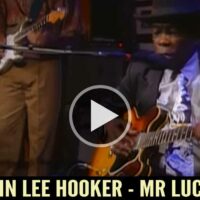
  • John Lee Hooker & Robert Cray – Mr Lucky

    John Lee Hooker & Robert Cray – Mr Lucky

    John Lee Hooker & Robert Cray – Mr Lucky
    John Lee Hooker & Robert Cray – Mr Lucky

    John Lee Hooker

    John Lee Hooker was a notable American blues singer, guitarist and songwriter. His fame rose when he performed electric guitar adaptations of Delta Blues. He also has this inclination to insert early North Mississippi Hill country blues and talking blues into his music with a genius twist.

    He is often compared in greatness to B. B. King, who was also born in Mississippi, just like Hooker. King’s contribution to Delta blues was a comprehensive guitar technique that harmonized blues with components of jazz, rhythm and blues and other popular music genres.

    But John Lee Hooker created a style of his own, in contrast, by retaining a pure and traditional approach of the Delta blues. In the postwar, he achieved more success, doing a crossover, using vocals with solo guitar. This was the style of earlier Delta players which he adopted, used to the hilt in his hit record, Boogie Chillen, in 1948.

    The later releases of John Lee like I’m in the Mood (1951), Boom Boom (1962) and The Healer (1989), incorporated soul and rock music.

    When Hooker was starting out in his musical career, he performed and recorded with rock musicians. One of his earliest partnerships was with The Groundhogs, a British blues rock band.

    Hooker and Canned Heat

    In 1970, he played adaptations of his songs with the group Canned Heat, an American blues and boogie rock band. The result was the joint album Hooker ‘n Heat.

    At his best, only with his electric guitar strapped on him, Hooker describes his musical style:

    The display of aggressive energy in fast boogies and also an ample show of intensity for stark and slow blues. A back to the basics guitarist – playing simple harmonies, pentatonic scales and also one chord modal harmonic structures.

    John Lee Hooker toured expansively beginning the 1950s and he also made appearances in movies like The Blues Brothers (1980) and The Color Purple (1985). He was inducted into the Rock and Roll Hall of Fame in 1991 and had a huge influence on bands such as The Animals and The Rolling Stones.

    John Lee Hooker recorded more than 100 albums. Among them was The Healer (1989) which had appearances by Carlos Santana and Bonnie Raitt. Other notable albums are The Best of Friends (1998) and Grammar Award winner Don’t Look Back (1997).

    Thank You

    We appreciate your time and dedication to reading our article. For more of the finest blues guitar music, make sure to follow our Facebook page, “I Love Blues Guitar”. We share exceptional selections every day. Thank you once again for your continued support and readership.

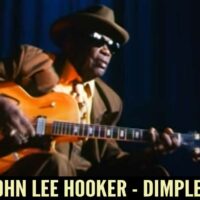
  • John Lee Hooker – Dimples

    John Lee Hooker – Dimples

    John Lee Hooker

    John Lee Hooker was a notable American blues singer, guitarist and songwriter. His fame rose when he performed electric guitar adaptations of Delta Blues. He also has this inclination to insert early North Mississippi Hill country blues and talking blues into his music with a genius twist.

    He is often compared in greatness to B. B. King, who was also born in Mississippi, just like Hooker. King’s contribution to Delta blues was a comprehensive guitar technique that harmonized blues with components of jazz, rhythm and blues and other popular music genres.

    But John Lee Hooker created a style of his own, in contrast, by retaining a pure and traditional approach of the Delta blues. In the postwar, he achieved more success, doing a crossover, using vocals with solo guitar. This was the style of earlier Delta players which he adopted, used to the hilt in his hit record, Boogie Chillen, in 1948.

    The later releases of John Lee like I’m in the Mood (1951), Boom Boom (1962) and The Healer (1989), incorporated soul and rock music.

    When Hooker was starting out in his musical career, he performed and recorded with rock musicians. One of his earliest partnerships was with The Groundhogs, a British blues rock band.

    Hooker and Canned Heat

    In 1970, he played adaptations of his songs with the group Canned Heat, an American blues and boogie rock band. The result was the joint album Hooker ‘n Heat.

    At his best, only with his electric guitar strapped on him, Hooker describes his musical style:

    The display of aggressive energy in fast boogies and also an ample show of intensity for stark and slow blues. A back to the basics guitarist – playing simple harmonies, pentatonic scales and also one chord modal harmonic structures.

    John Lee Hooker toured expansively beginning the 1950s and he also made appearances in movies like The Blues Brothers (1980) and The Color Purple (1985). He was inducted into the Rock and Roll Hall of Fame in 1991 and had a huge influence on bands such as The Animals and The Rolling Stones.

    John Lee Hooker recorded more than 100 albums. Among them was The Healer (1989) which had appearances by Carlos Santana and Bonnie Raitt. Other notable albums are The Best of Friends (1998) and Grammar Award winner Don’t Look Back (1997).

    John Lee Hooker – Dimples
    John Lee Hooker – Dimples

    Thank You

    We appreciate your time and dedication to reading our article. For more of the finest blues guitar music, make sure to follow our Facebook page, “I Love Blues Guitar”. We share exceptional selections every day. Thank you once again for your continued support and readership.

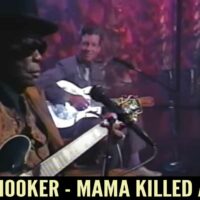
  • John Lee Hooker and John Hammond – Mama Killed A Chicken

    John Lee Hooker and John Hammond – Mama Killed A Chicken

    John Lee Hooker and John Hammond – Mama Killed A Chicken
    John Lee Hooker and John Hammond – Mama Killed A Chicken

    John Lee Hooker

    John Lee Hooker was a notable American blues singer, guitarist and songwriter. His fame rose when he performed electric guitar adaptations of Delta Blues. He also has this inclination to insert early North Mississippi Hill country blues and talking blues into his music with a genius twist.

    He is often compared in greatness to B. B. King, who was also born in Mississippi, just like Hooker. King’s contribution to Delta blues was a comprehensive guitar technique that harmonized blues with components of jazz, rhythm and blues and other popular music genres.

    But John Lee Hooker created a style of his own, in contrast, by retaining a pure and traditional approach of the Delta blues. In the postwar, he achieved more success, doing a crossover, using vocals with solo guitar. This was the style of earlier Delta players which he adopted, used to the hilt in his hit record, Boogie Chillen, in 1948.

    The later releases of John Lee like I’m in the Mood (1951), Boom Boom (1962) and The Healer (1989), incorporated soul and rock music.

    When Hooker was starting out in his musical career, he performed and recorded with rock musicians. One of his earliest partnerships was with The Groundhogs, a British blues rock band.

    In 1970, he played adaptations of his songs with the group Canned Heat, an American blues and boogie rock band. The result was the joint album Hooker ‘n Heat.

    At his best, only with his electric guitar strapped on him, Hooker describes his musical style:

    The display of aggressive energy in fast boogies and also an ample show of intensity for stark and slow blues. A back to the basics guitarist – playing simple harmonies, pentatonic scales and also one chord modal harmonic structures.

    John Lee Hooker toured expansively beginning the 1950s and he also made appearances in movies like The Blues Brothers (1980) and The Color Purple (1985). He was inducted into the Rock and Roll Hall of Fame in 1991 and had a huge influence on bands such as The Animals and The Rolling Stones.

    John Lee Hooker recorded more than 100 albums. Among them was The Healer (1989) which had appearances by Carlos Santana and Bonnie Raitt. Other notable albums are The Best of Friends (1998) and Grammar Award winner Don’t Look Back (1997).

    John Hammond

    John Paul Hammond (born November 13, 1942, New York City) is an American blues singer and guitarist. Hammond usually plays acoustically, choosing National Reso-Phonic Guitars, and sings in a barrelhouse style.

    He is Blues Music Award Winner: 2004 and 2003 for Best Acoustic Blues Artist, 2002 for Best Acoustic Album for his Tom Waits produced Wicked Grin. To date, Hammond has been honored with a total of 8 Blues Music Awards and an additional 10 nominations

    He’s a historian of the Blues, acoustic and electric and it shows. He can accurately replicate just about any historic Blues figure you can name. He’s equally adept at the guitar and the harmonica and a joy to listen to.

    Song Title

    The song “Mama Killed A Chicken” you can find on the album “Alone Volume 2”, but the same song on Spotify have named “You Ain’t Too Old to Shift Them Gears”. Similar lyrics are for the song “Bottle Up & Go”

    John Lee Hooker and John Hammond – Mama Killed A Chicken
    John Lee Hooker and John Hammond – Mama Killed A Chicken
    We appreciate your time and dedication to reading our article. For more of the finest blues guitar music, make sure to follow our Facebook page, “I Love Blues Guitar”. We share exceptional selections every day. Thank you once again for your continued support and readership.
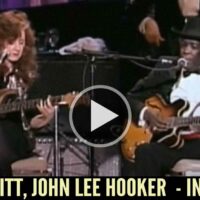
  • Bonnie Raitt, John Lee Hooker  – In The Mood

    Bonnie Raitt, John Lee Hooker  – In The Mood

    Bonnie Raitt, John Lee Hooker  – In The Mood
    Bonnie Raitt, John Lee Hooker – In The Mood

    Bonnie Raitt

    She has been successfully operating in the music industry for 50 years. Just like wine, with age, it gets better and better. Just look at how it moves on stage. A small character with a well-worn Loss, gracefully named “Brownie”, can make a real fire.

    Although she grew up on a diet consisting of Jack Daniels and music created by Mississippi Fred McDowell, her work was not limited only to the blues. The ballad “I Can not Make You Love Me” is still an inseparable element of Bonnie’s concerts.

    Her album Slipstream, released in 2012, was the first album that appeared after 7 years of publishing break. We did not have to wait so long for the next album. In 2016  the Dig In Deep album was released: a magical mix of rock, R & B, blues, and characteristic Bonnie-style guitar slides. Goose skin is guaranteed!

    Raitt has received ten Grammy Awards. She is listed as number 50 in Rolling Stone magazine’s list of the 100 Greatest Singers of All Time and number 89 on their list of the 100 Greatest Guitarists of All Time.

    Raitt’s principal touring guitar is a customized Fender Stratocaster that she nicknamed Brownie. This became the basis for a signature model in 1996. Raitt was the first female musician to receive a signature Fender line.

    John Lee Hooker

    John Lee Hooker was a notable American blues singer, guitarist and songwriter. His fame rose when he performed electric guitar adaptations of Delta Blues. He also has this inclination to insert early North Mississippi Hill country blues and talking blues into his music with a genius twist.

    He is often compared in greatness to B. B. King, who was also born in Mississippi, just like Hooker. King’s contribution to Delta blues was a comprehensive guitar technique that harmonized blues with components of jazz, rhythm and blues and other popular music genres.

    But John Lee Hooker created a style of his own, in contrast, by retaining a pure and traditional approach of the Delta blues. In the postwar, he achieved more success, doing a crossover, using vocals with solo guitar. This was the style of earlier Delta players which he adopted, used to the hilt in his hit record, Boogie Chillen, in 1948.

    The later releases of John Lee like I’m in the Mood (1951), Boom Boom (1962) and The Healer (1989), incorporated soul and rock music.

    When Hooker was starting out in his musical career, he performed and recorded with rock musicians. One of his earliest partnerships was with The Groundhogs, a British blues rock band.

    John Lee Hooker recorded more than 100 albums. Among them was The Healer (1989) which had appearances by Carlos Santana and Bonnie Raitt. Other notable albums are The Best of Friends (1998) and Grammar Award winner Don’t Look Back (1997).

    Video

    Thank You

    We appreciate your time and dedication to reading our article. For more of the finest blues guitar music, make sure to follow our Facebook page, “I Love Blues Guitar”. We share exceptional selections every day. Thank you once again for your continued support and readership.

  • John Lee Hooker, Carlos Santana – Blues Boogie Jam

    John Lee Hooker, Carlos Santana – Blues Boogie Jam

    John Lee Hooker

    John Lee Hooker was a notable American blues singer, guitarist and songwriter. His fame rose when he performed electric guitar adaptations of Delta Blues. He also has this inclination to insert early North Mississippi Hill country blues and talking blues into his music with a genius twist.

    He is often compared in greatness to B. B. King, who was also born in Mississippi, just like Hooker. King’s contribution to Delta blues was a comprehensive guitar technique that harmonized blues with components of jazz, rhythm and blues and other popular music genres.

    But John Lee Hooker created a style of his own, in contrast, by retaining a pure and traditional approach of the Delta blues. In the postwar, he achieved more success, doing a crossover, using vocals with solo guitar. This was the style of earlier Delta players which he adopted, used to the hilt in his hit record, Boogie Chillen, in 1948.

    The later releases of John Lee like I’m in the Mood (1951), Boom Boom (1962) and The Healer (1989), incorporated soul and rock music.

    When Hooker was starting out in his musical career, he performed and recorded with rock musicians. One of his earliest partnerships was with The Groundhogs, a British blues rock band.

    In 1970, he played adaptations of his songs with the group Canned Heat, an American blues and boogie rock band. The result was the joint album Hooker ‘n Heat.

    At his best, only with his electric guitar strapped on him, Hooker describes his musical style:

    The display of aggressive energy in fast boogies and also an ample show of intensity for stark and slow blues. A back to the basics guitarist – playing simple harmonies, pentatonic scales and also one chord modal harmonic structures.

    John Lee Hooker in Blues Brothers movie

    John Lee Hooker toured expansively beginning the 1950s and he also made appearances in movies like The Blues Brothers (1980) and The Color Purple (1985). He was inducted into the Rock and Roll Hall of Fame in 1991 and had a huge influence on bands such as The Animals and The Rolling Stones.

    John Lee Hooker recorded more than 100 albums. Among them was The Healer (1989) which had appearances by Carlos Santana and Bonnie Raitt. Other notable albums are The Best of Friends (1998) and Grammar Award winner Don’t Look Back (1997).

    Santana

    Carlos Santana – legendary musician, guitar virtuoso. He was born in Mexico, Autlan de Navarro, on July 20, 1947. In the early 1960s, he came to the USA and settled in San Francisco. A few years later, in 1966, the musician founded a band called Santana Blues Band, which still exists today as Santana, creates rock music inspired by Latin American folklore and blues.
    In the course of over 30 years of career, with his band, he has released more than 20 albums and recorded 7 solo albums sold in a total of over 50 million copies, the band also played concerts for over 30 million fans. The musician has won countless awards and distinctions, including in 1998 he was inducted into the Rock’n’Roll Hall Of Fame (Rock’n’Roll Hall of Fame).

    Video source: https://www.youtube.com/watch?v=jRMzVMe18cA

    Thank you!

    We appreciate your time and dedication to reading our article. For more of the finest blues guitar music, make sure to follow our Facebook page, “I Love Blues Guitar”. We share exceptional selections every day. Thank you once again for your continued support and readership.

  • John Lee Hooker And Van Morrison – Baby Please Don’t Go

    John Lee Hooker And Van Morrison – Baby Please Don’t Go

    John Lee Hooker And Van Morrison – Baby Please Don’t Go
    John Lee Hooker And Van Morrison – Baby Please Don’t Go

    John Lee Hooker

    John Lee Hooker was a notable American blues singer, guitarist and songwriter. His fame rose when he performed electric guitar adaptations of Delta Blues. He also has this inclination to insert early North Mississippi Hill country blues and talking blues into his music with a genius twist.

    He is often compared in greatness to B. B. King, who was also born in Mississippi, just like Hooker. King’s contribution to Delta blues was a comprehensive guitar technique that harmonized blues with components of jazz, rhythm and blues and other popular music genres.

    But John Lee Hooker created a style of his own, in contrast, by retaining a pure and traditional approach of the Delta blues. In the postwar, he achieved more success, doing a crossover, using vocals with solo guitar. This was the style of earlier Delta players which he adopted, used to the hilt in his hit record, Boogie Chillen, in 1948.

    The later releases of John Lee like I’m in the Mood (1951), Boom Boom (1962) and The Healer (1989), incorporated soul and rock music.

    When Hooker was starting out in his musical career, he performed and recorded with rock musicians. One of his earliest partnerships was with The Groundhogs, a British blues rock band.

    Hooker and Canned Heat

    In 1970, he played adaptations of his songs with the group Canned Heat, an American blues and boogie rock band. The result was the joint album Hooker ‘n Heat.

    At his best, only with his electric guitar strapped on him, Hooker describes his musical style:

    The display of aggressive energy in fast boogies and also an ample show of intensity for stark and slow blues. A back to the basics guitarist – playing simple harmonies, pentatonic scales and also one chord modal harmonic structures.

    John Lee Hooker toured expansively beginning the 1950s and he also made appearances in movies like The Blues Brothers (1980) and The Color Purple (1985). He was inducted into the Rock and Roll Hall of Fame in 1991 and had a huge influence on bands such as The Animals and The Rolling Stones.

    John Lee Hooker recorded more than 100 albums. Among them was The Healer (1989) which had appearances by Carlos Santana and Bonnie Raitt. Other notable albums are The Best of Friends (1998) and Grammar Award winner Don’t Look Back (1997).

    John Lee Hooker and Van Morrison had collaborated on several occasions over the years. They guested on each other’s albums, Hooker also appearing on two films with Morrison BBC’s One Irish Rover and Morrison’s 1990 video, Van Morrison The Concert.

  • John Lee Hooker – Boom Boom (from “The Blues Brothers”)

    John Lee Hooker – Boom Boom (from “The Blues Brothers”)

    John Lee Hooker

    John Lee Hooker was a notable American blues singer, guitarist and songwriter. His fame rose when he performed electric guitar adaptations of Delta Blues. He also has this inclination to insert early North Mississippi Hill country blues and talking blues into his music with a genius twist.

    He is often compared in greatness to B. B. King, who was also born in Mississippi, just like Hooker. King’s contribution to Delta blues was a comprehensive guitar technique that harmonized blues with components of jazz, rhythm and blues and other popular music genres.

    But John Lee Hooker created a style of his own, in contrast, by retaining a pure and traditional approach of the Delta blues. In the postwar, he achieved more success, doing a crossover, using vocals with solo guitar. This was the style of earlier Delta players which he adopted, used to the hilt in his hit record, Boogie Chillen, in 1948.

    The later releases of John Lee like I’m in the Mood (1951), Boom Boom (1962) and The Healer (1989), incorporated soul and rock music.

    When Hooker was starting out in his musical career, he performed and recorded with rock musicians. One of his earliest partnerships was with The Groundhogs, a British blues rock band.

    Hooker and Canned Heat

    In 1970, he played adaptations of his songs with the group Canned Heat, an American blues and boogie rock band. The result was the joint album Hooker ‘n Heat.

    At his best, only with his electric guitar strapped on him, Hooker describes his musical style:

    The display of aggressive energy in fast boogies and also an ample show of intensity for stark and slow blues. A back to the basics guitarist – playing simple harmonies, pentatonic scales and also one chord modal harmonic structures.

    John Lee Hooker toured expansively beginning the 1950s and he also made appearances in movies like The Blues Brothers (1980) and The Color Purple (1985). He was inducted into the Rock and Roll Hall of Fame in 1991 and had a huge influence on bands such as The Animals and The Rolling Stones.

    John Lee Hooker recorded more than 100 albums. Among them was The Healer (1989) which had appearances by Carlos Santana and Bonnie Raitt. Other notable albums are The Best of Friends (1998) and Grammar Award winner Don’t Look Back (1997).

    John Lee Hooker - Boom Boom (from "The Blues Brothers")
    John Lee Hooker – Boom Boom (from “The Blues Brothers”)
  • John Lee Hooker – Crawlin’ King Snake

    John Lee Hooker – Crawlin’ King Snake

    John Lee Hooker and Ry Cooder’s Timeless Blues

    The classic blues of John Lee Hooker and celebrated guitarist Ry Cooder was performed on October 10, 1992 at the Shoreline Amphitheatre in Mountain View, California. This concert was part of the All Our Colors – The Good Road Concert, which aimed to help Native American communities that were struggling.

    John Lee Hooker was an eminent figure in the realm of blues music. He was born in Mississippi in 1917, and in the 1940s he relocated to Detroit, where he started recording for various music labels. Hooker was well-known for his raw, genuine sound. He worked with a broad range of musicians throughout his six-decade-long career, and he was the recipient of numerous awards, including the Lifetime Achievement Award at the Grammys.

    Ry Cooder was also an esteemed musician with a remarkable career. He was born in Los Angeles in 1947 and began playing the guitar when he was young. He subsequently became one of the music industry’s most sought-after session musicians. Cooder was known for his varied musical preferences and his ability to fuse different genres and styles, which made him an excellent fit for Hooker’s bluesy sound.

    A Benefit Concert for Native American Communities

    During the Shoreline Amphitheatre performance, Hooker and Cooder played four songs: “Lonely Man,” “Serves Me Right To Suffer,” “Hobo Blues,” and “Crawlin’ King Snake.” Despite the brevity of the set, the duo made a lasting impression on the audience. Their music was a potent tribute to the long-lasting influence of the blues.

    As the concert concluded, Hooker and Cooder took their final bows, while the audience continued to cheer and applaud. The benefit concert was a great success, and funds were raised to help the Native American communities in need. The music of Hooker and Cooder played an essential role in making it a memorable evening, a celebration of two of the most significant musicians of their time, and a demonstration of the power of music to bring people together.

    Thank you

    We appreciate your time and dedication to reading our article. For more of the finest blues guitar music, make sure to follow our Facebook page, “I Love Blues Guitar”. We share exceptional selections every day. Thank you once again for your continued support and readership.