Fb-Button
Jimi Hendrix Archives - I Love Blues Guitar
I Love Blues Guitar

Tag: Jimi Hendrix

  • Jimi Hendrix – All Along The Watchtower

    Jimi Hendrix – All Along The Watchtower

    Jimi Hendrix – “All Along the Watchtower”: A Sonic Storm That Redefined a Dylan Classic

    When Jimi Hendrix picked up Bob Dylan’s cryptic folk song “All Along the Watchtower” in 1968, he didn’t just cover it—he shattered it, rebuilt it, and launched it into another dimension. With his version, Hendrix took Dylan’s parable-like lyrics and infused them with cosmic fire, turning a quiet acoustic tale into a thunderous, electric revelation.

    In doing so, he created one of the most iconic and enduring rock recordings of all time—a track that even Dylan himself came to embrace as definitive. Hendrix’s “Watchtower” is more than a cover. It’s a transformation, and a prime example of what happens when a visionary artist reimagines a masterwork through their own singular lens.

    The Origins: Dylan’s Mystery, Hendrix’s Vision

    Bob Dylan first released “All Along the Watchtower” on his 1967 album John Wesley Harding, a stripped-down, folk-blues meditation filled with Biblical imagery and existential dread. The lyrics read like a riddle—dialogue between a joker and a thief, followed by ominous lines about princes, watchtowers, and gathering storms.

    “There must be some way out of here,” said the joker to the thief…

    Enter Jimi Hendrix. Upon hearing Dylan’s version, he recognized something burning beneath the surface. Hendrix took the skeletal structure and amplified its tension, its mystery, and its apocalyptic energy, wrapping it in waves of guitar and layered emotion.

    The Sound: Electric Revelation

    Recorded at Olympic Studios in London with the Experience—Mitch Mitchell on drums and Noel Redding on bass, plus guest contributions from Dave Mason and Brian Jones—Hendrix’s version of “All Along the Watchtower” is a three-minute sonic hurricane.

    It opens with an urgent rhythm guitar line, then erupts with Hendrix’s unmistakable lead work—fluid, snarling, and crackling with distortion. The production is rich and layered, each guitar part swirling in and out like smoke. The drums crash and tumble, the bass throbs, and Hendrix’s voice—confident, cool, prophetic—delivers the lyrics with a gravity that feels almost divine.

    “Businessmen, they drink my wine / Plowmen dig my earth…”

    Every phrase sounds like it’s being carved into stone. And the guitar solos, which Hendrix weaves between verses like a second voice, are nothing short of transcendent—both bluesy and futuristic, wild and precise, human and alien.

    The Impact: Dylan Approves

    Bob Dylan was so impressed by Hendrix’s version that he not only praised it—he adopted Hendrix’s arrangement in his own live performances from the 1970s onward.

    Dylan once said of Hendrix:

    “He played [my songs] the way I would have played them… if I were that good.”

    High praise from the song’s original author—and a reflection of how Hendrix didn’t just cover the tune, but revealed a deeper layer of its meaning through his performance. His version has become the definitive take for many listeners and regularly tops lists of the greatest cover songs ever recorded.

    Legacy: A Towering Monument in Rock History

    “All Along the Watchtower” was released in September 1968 as a single and later appeared on Electric Ladyland, Hendrix’s final studio album with the Experience. It became his highest-charting single in the U.S., reaching #20 on the Billboard Hot 100.

    Over the decades, it has remained a pillar of Hendrix’s legacy, regularly cited as one of the greatest guitar recordings of all time. It has influenced generations of guitarists, songwriters, and producers—and still sounds like a storm on the horizon.

    Final Thoughts

    Jimi Hendrix didn’t just reinterpret Bob Dylan’s “All Along the Watchtower”—he electrified its soul, revealing the fire and foreboding buried beneath its verses. With his visionary guitar work, spiritual intensity, and fearless creativity, Hendrix turned a whispered warning into a shouted prophecy.

    A joker, a thief, a watchtower, and a coming storm.
    In Hendrix’s hands, these weren’t just words—they were revelations.

    And they still echo, loud and clear, more than 50 years later.

    Thank You

    We appreciate your time and dedication to reading our article. For more of the finest blues guitar music, make sure to follow our Facebook page, “I Love Blues Guitar”. We share exceptional selections every day. Thank you once again for your continued support and readership.

  • The Jimi Hendrix Experience – Purple Haze

    The Jimi Hendrix Experience – Purple Haze

    The Jimi Hendrix Experience – Purple Haze: The Sound That Rewired Rock Music

    When the World Heard Something It Had Never Heard Before

    If there’s a single moment when rock music changed forever, it might just be the first few seconds of “Purple Haze.” That explosive guitar riff — warped, distorted, and unmistakably otherworldly — sounded like it came from another planet. And in a way, it did.

    Released in 1967, “Purple Haze” was Jimi Hendrix announcing himself to the world — not just as a great guitarist, but as a force of nature. The first time I heard it, I remember feeling like the air itself had changed.

    The Birth of a Legend

    “Purple Haze” was written by Jimi Hendrix and recorded with The Jimi Hendrix Experience — bassist Noel Redding and drummer Mitch Mitchell — in early 1967. It became the band’s second single and their breakthrough hit, reaching No. 3 in the U.K. and cementing Hendrix as a revolutionary new voice in rock.

    Legend has it the idea came to Hendrix in a dream, or perhaps a daydream — he woke up, grabbed his guitar, and started writing what would become one of the most iconic riffs in rock history.

    The Lyrics: Surreal, Psychedelic, and Unmistakably Jimi

    Lyrically, “Purple Haze” walks that fine line between love song and cosmic vision. The opening line — “Purple haze all in my brain” — immediately pulls you into a hallucinatory world where nothing is quite clear.

    Hendrix once described it as a love song, though many listeners heard psychedelic undertones. Whether it’s about confusion, desire, or altered consciousness, the beauty is that it means whatever you feel it means.

    That’s the essence of Hendrix — no limits, no single interpretation, just freedom.

    The Music: Controlled Chaos and Pure Innovation

    Musically, “Purple Haze” broke every rule in the book. Hendrix’s use of the tritone — once known as “the devil’s interval” — created tension and mystery. His fuzz-drenched tone, achieved through the Maestro Fuzz-Tone and Octavia pedals, redefined what an electric guitar could do.

    Meanwhile, Redding’s bass rumbles underneath like an engine, and Mitchell’s drumming dances between power and precision. Together, they built a sound that was heavy, hypnotic, and totally new.

    That solo? Still untouchable.

    A Fan’s Reflection

    The first time I heard “Purple Haze” wasn’t on the radio — it was through an old record player in a friend’s garage. The needle dropped, the riff exploded, and for a few minutes, we just stood there in awe. It felt like the sound of electricity itself coming alive.

    Even now, after hearing it hundreds of times, it still gives me chills. There’s something about that combination of grit and imagination that never fades.

    The Legacy of Purple Haze

    More than half a century later, “Purple Haze” is still one of the cornerstones of rock guitar. Every guitarist who’s ever bent a string owes something to Jimi Hendrix.

    For me, it’s not just a song — it’s a revolution in three minutes. The moment when sound, soul, and pure creativity collided and changed music forever.

  • Jimi Hendrix – Stone Free

    Jimi Hendrix – Stone Free

    Jimi Hendrix: Shattering Boundaries and Embracing Freedom with “Stone Free”

    When we delve into the history of rock music, it’s impossible not to pay homage to the one who changed the course of the genre. A figure who broke barriers, defied conventions and left an indelible mark in the world of music – the maestro of strings, Jimi Hendrix. Known for his fiery performances and innovative techniques, Hendrix revolutionized the way guitar was played and perceived. One of his iconic songs, “Stone Free”, released by the Jimi Hendrix Experience, serves as a vibrant testament to his unorthodox approach to guitar playing and songwriting.

    Born in 1942 in Seattle, Washington, Hendrix quickly showed a passion for music, specifically for the guitar. Despite not having formal training, he spent countless hours listening to blues artists such as Muddy Waters and B.B. King, which heavily influenced his style. In a world dominated by traditional guitar techniques, Hendrix emerged as a pioneer, subverting expectations and revolutionizing the way the guitar was played.

    He embraced guitar feedback, incorporated extensive use of guitar effects such as fuzz, wah-wah, and phasing, and often played his guitar in unusual ways, like behind his back or with his teeth. But perhaps one of his most iconic innovations was his use of the guitar as an extension of his lyrical themes. This led to the creation of a vivid sonic palette, making his music a journey of sound exploration.

    “Stone Free”, one of the first songs Hendrix wrote after moving to England and forming the Jimi Hendrix Experience, perfectly exemplifies his innovative approach. Recorded in 1966 at De Lane Lea Studios and released as a B-side to “Hey Joe”, it’s more than just a composition – it’s an anthem of liberation and self-expression.

    The song’s lyrics express a yearning for freedom and an aversion to any form of confinement. The term “stone free” itself has been interpreted as a metaphor for breaking free from societal constraints, much like a stone breaking free from a rock face. Just as Hendrix transcended traditional guitar-playing norms, the song’s protagonist seeks to transcend societal expectations.

    Musically, “Stone Free” is equally revolutionary. The track’s vibrant guitar lines, infused with bluesy bends and pentatonic runs, go beyond the typical major-minor key dynamics of the era. It also integrates distinctive rhythms from soul and funk, deviating from standard rock song structures.

    Hendrix’s guitar work on “Stone Free” exemplifies his ability to blend rhythm and lead guitar playing. This technique, known as “lead-rhythm” guitar playing, was rare at the time and has since been adopted by countless guitarists. The song also demonstrates Hendrix’s effective use of feedback and distortion, creating a raw, powerful sound that became a signature element of his style.

    In many ways, “Stone Free” mirrors Hendrix’s own journey as an artist. It’s a bold declaration of independence, a reflection of his break from traditional guitar playing and his pursuit of musical innovation. Hendrix’s groundbreaking approach challenged what was considered possible with a guitar, liberating future generations of musicians to push their own boundaries and take their craft in new and exciting directions.

    The legacy of Jimi Hendrix continues to echo through the halls of rock history, with songs like “Stone Free” serving as a reminder of his innovative spirit. He taught us that the guitar is more than just an instrument – it’s a tool for expression, a vessel for emotion, and a conduit for change. Through his artistry, Hendrix redefined the language of the guitar and laid the foundation for the future of rock music. And for that, the world of music will forever be in his debt.

    Jimi Hendrix – Stone Free
    Jimi Hendrix – Stone Free

    We appreciate your time and dedication to reading our article. For more of the finest blues guitar music, make sure to follow our Facebook page, “I Love Blues Guitar”. We share exceptional selections every day. Thank you once again for your continued support and readership.

  • Jimi Hendrix – Purple Haze

    Jimi Hendrix – Purple Haze

    Jimi Hendrix

    Jimi Hendrix, or rather James Marshall Hendrix was born on November 27, 1942, in Seattle, Washington. Under the influence of his father, he enlisted in the army. He was released after a spine injury sustained during a parachute jump.

    Hendrix learned to play the guitar himself. Until 1966, he performed in various bands, already then surprising with his perfect guitar playing. In late 1966, thanks to Chas Chandler, bassist of The Animals, who brought him to London, Hendrix formed the band Experience, which included Noel Redding – bass guitar and John “Mitch” Mitchell – drums.

    The first single, recorded in late 1966, featured Billy Roberts’ dramatic ballad “Hey Joe” and was a huge success.

    In London, Hendrix befriended Eric Clapton. He is the one who describes Hendrix’s first performances: “I think he played a Howlin ‘Wolf song or something. He played the guitar with his teeth, put it on the floor, held the guitar behind his head and made other wobbles. It was unbelievable” …

    Initially, Hendrix moved to Hyde Park Towers with Chas Chandler, and then to an apartment that previously belonged to … The Beatles – at 34 Montague Square.

    The band’s second single “Purple Haze” was released on March 17, 1967, and the third single, “The Wind Cries Mary”, was released on May 4, 1967. They all reached the top ten of the UK charts.

    In 1969, Hendrix formed a new band called Band of Gypsys. A year later, he joined Eric Burdon and the War group.

    On September 18, 1970, after a concert at Ronnie Scott’s club in London, Jimi Hendrix at the age of 27 died intoxicated with drugs and alcohol.

    The funeral was held on October 1 at Dunlap Baptist Church on Rainier Avenue South in Seattle. A bronze statue of Hendrix stood on the Isle of Wight, the venue of his last concert.

    Songs played by Jimi Hendrix are often covered. Have you heard the acoustic version of this song arranged at the request of fans by acoustic guitar master Tommy Emmanuel?

  • Jimi Hendrix – Bleeding Heart

    Jimi Hendrix – Bleeding Heart

    Jimi Hendrix – Bleeding Heart
    Jimi Hendrix – Bleeding Heart

    Jimi Hendrix: The Revolutionary Guitar Maestro and His Everlasting Legacy in Blues and Rock

    The world of rock and blues guitar was forever transformed by the electrifying prowess of Jimi Hendrix. From his awe-inspiring solos to his innovative use of feedback and effects, Hendrix’s guitar style was, and remains, a masterclass in creative expression. Let’s journey into the heart of this legend’s strings and the profound impact he’s had on subsequent generations.

    Firstly, it’s imperative to understand that Hendrix was not just a guitarist; he was a sonic innovator. The left-handed maestro played a right-handed guitar flipped upside down, a distinctive technique which allowed him to approach the fretboard differently. This unique positioning granted him access to unusual chord inversions and phrasing that few could emulate. However, it wasn’t just his hand orientation that made him stand out. Hendrix’s melding of blues scales with the hard-driving force of rock, and the psychedelic explorations of the era, turned his performances into deeply emotional experiences.

    One of Hendrix’s standout techniques was his exceptional use of the whammy bar. Rather than just using it for occasional vibrato, Hendrix employed it to craft entire melodic structures, making his Stratocaster weep, wail, and sing in a way that no one had heard before. Listen to the ethereal intro of “Voodoo Child (Slight Return)” and you’ll get a taste of his whammy bar artistry.

    Furthermore, Hendrix’s pioneering use of feedback was a masterstroke. Where many saw it as a problematic noise, Hendrix embraced it as a musical tool. His intimate understanding of how to control feedback — by altering his guitar’s positioning relative to the amp — allowed him to infuse his music with otherworldly sounds that seemed to come from another dimension.

    The profound influence of Jimi Hendrix is undeniable. Guitarists like Stevie Ray Vaughan, Joe Satriani, and John Mayer have all cited Hendrix as an influence, drawing from his blues-based riffs and psychedelic flourishes to carve their own niches. His adventurous spirit encouraged them, and many others, to push boundaries and redefine the sonic landscape of their respective genres.

    The ripple effects of Hendrix’s innovations continue to inspire new generations. Guitarists now seamlessly integrate techniques he popularized, from intricate uses of pedal effects to fearless dives into experimental tonal territories.

    In conclusion, Jimi Hendrix was much more than a musical virtuoso; he was a revolutionary. His relentless pursuit of uncharted soundscape territories paved the way for countless artists. Through the legacy of his style and spirit, Hendrix still beckons guitarists everywhere to break conventions and redefine what’s possible with six strings.

    We appreciate your time and dedication to reading our article. For more of the finest blues guitar music, make sure to follow our Facebook page, “I Love Blues Guitar”. We share exceptional selections every day. Thank you once again for your continued support and readership.

  • Jimi Hendrix – Stone Free

    Jimi Hendrix – Stone Free

    Jimi Hendrix – Stone Free
    Jimi Hendrix – Stone Free

    Jimi Hendrix: Shattering Boundaries and Embracing Freedom with “Stone Free”

    When we delve into the history of rock music, it’s impossible not to pay homage to the one who changed the course of the genre. A figure who broke barriers, defied conventions and left an indelible mark in the world of music – the maestro of strings, Jimi Hendrix. Known for his fiery performances and innovative techniques, Hendrix revolutionized the way guitar was played and perceived. One of his iconic songs, “Stone Free”, released by the Jimi Hendrix Experience, serves as a vibrant testament to his unorthodox approach to guitar playing and songwriting.

    Born in 1942 in Seattle, Washington, Hendrix quickly showed a passion for music, specifically for the guitar. Despite not having formal training, he spent countless hours listening to blues artists such as Muddy Waters and B.B. King, which heavily influenced his style. In a world dominated by traditional guitar techniques, Hendrix emerged as a pioneer, subverting expectations and revolutionizing the way the guitar was played.

    He embraced guitar feedback, incorporated extensive use of guitar effects such as fuzz, wah-wah, and phasing, and often played his guitar in unusual ways, like behind his back or with his teeth. But perhaps one of his most iconic innovations was his use of the guitar as an extension of his lyrical themes. This led to the creation of a vivid sonic palette, making his music a journey of sound exploration.

    “Stone Free”, one of the first songs Hendrix wrote after moving to England and forming the Jimi Hendrix Experience, perfectly exemplifies his innovative approach. Recorded in 1966 at De Lane Lea Studios and released as a B-side to “Hey Joe”, it’s more than just a composition – it’s an anthem of liberation and self-expression.

    The song’s lyrics express a yearning for freedom and an aversion to any form of confinement. The term “stone free” itself has been interpreted as a metaphor for breaking free from societal constraints, much like a stone breaking free from a rock face. Just as Hendrix transcended traditional guitar-playing norms, the song’s protagonist seeks to transcend societal expectations.

    Musically, “Stone Free” is equally revolutionary. The track’s vibrant guitar lines, infused with bluesy bends and pentatonic runs, go beyond the typical major-minor key dynamics of the era. It also integrates distinctive rhythms from soul and funk, deviating from standard rock song structures.

    Hendrix’s guitar work on “Stone Free” exemplifies his ability to blend rhythm and lead guitar playing. This technique, known as “lead-rhythm” guitar playing, was rare at the time and has since been adopted by countless guitarists. The song also demonstrates Hendrix’s effective use of feedback and distortion, creating a raw, powerful sound that became a signature element of his style.

    In many ways, “Stone Free” mirrors Hendrix’s own journey as an artist. It’s a bold declaration of independence, a reflection of his break from traditional guitar playing and his pursuit of musical innovation. Hendrix’s groundbreaking approach challenged what was considered possible with a guitar, liberating future generations of musicians to push their own boundaries and take their craft in new and exciting directions.

    The legacy of Jimi Hendrix continues to echo through the halls of rock history, with songs like “Stone Free” serving as a reminder of his innovative spirit. He taught us that the guitar is more than just an instrument – it’s a tool for expression, a vessel for emotion, and a conduit for change. Through his artistry, Hendrix redefined the language of the guitar and laid the foundation for the future of rock music. And for that, the world of music will forever be in his debt.

    We appreciate your time and dedication to reading our article. For more of the finest blues guitar music, make sure to follow our Facebook page, “I Love Blues Guitar”. We share exceptional selections every day. Thank you once again for your continued support and readership.

  • Jimi Hendrix – Purple Haze

    Jimi Hendrix – Purple Haze

    Jimi Hendrix – Purple Haze
    Jimi Hendrix – Purple Haze

    Engage your senses: Press play on the video, then stimulate your brain with the article.

    Jimi Hendrix

    Jimi Hendrix, or rather James Marshall Hendrix was born on November 27, 1942, in Seattle, Washington. Under the influence of his father, he enlisted in the army. He was released after a spine injury sustained during a parachute jump.

    Hendrix learned to play the guitar himself. Until 1966, he performed in various bands, already then surprising with his perfect guitar playing. In late 1966, thanks to Chas Chandler, bassist of The Animals, who brought him to London, Hendrix formed the band Experience, which included Noel Redding – bass guitar and John “Mitch” Mitchell – drums.

    The first single, recorded in late 1966, featured Billy Roberts’ dramatic ballad “Hey Joe” and was a huge success.

    In London, Hendrix befriended Eric Clapton. He is the one who describes Hendrix’s first performances: “I think he played a Howlin ‘Wolf song or something. He played the guitar with his teeth, put it on the floor, held the guitar behind his head and made other wobbles. It was unbelievable” …

    Initially, Hendrix moved to Hyde Park Towers with Chas Chandler, and then to an apartment that previously belonged to … The Beatles – at 34 Montague Square.

    The band’s second single “Purple Haze” was released on March 17, 1967, and the third single, “The Wind Cries Mary”, was released on May 4, 1967. They all reached the top ten of the UK charts.

    In 1969, Hendrix formed a new band called Band of Gypsys. A year later, he joined Eric Burdon and the War group.

    On September 18, 1970, after a concert at Ronnie Scott’s club in London, Jimi Hendrix at the age of 27 died intoxicated with drugs and alcohol.

    The funeral was held on October 1 at Dunlap Baptist Church on Rainier Avenue South in Seattle. A bronze statue of Hendrix stood on the Isle of Wight, the venue of his last concert.

  • Jimi Hendrix – Bleeding Heart

    Jimi Hendrix – Bleeding Heart

    Jimi Hendrix: The Guitar Maverick and His Undying Legacy

    The annals of rock and blues are packed with legendary figures, but few wield the same transcendent power as Jimi Hendrix. The way he cradled his guitar, the sheer audacity of his stage presence, and most importantly, the revolutionary techniques he brought to the six strings, have made him an eternal luminary.

    Hendrix’s guitar style was a melting pot of influences, each assimilated and regurgitated with a unique twist. Rooted deeply in the blues, he took cues from the raw emotions of artists like Muddy Waters and B.B. King. But Hendrix wasn’t one to stay boxed in. He took the foundational blues scales and motifs, then pushed them into the stratosphere with his signature use of feedback, whammy bar dives, and mind-bending effects. The “Star Spangled Banner” performance at Woodstock remains emblematic of this, where he transformed a national anthem into a rebellious, psychedelic opus.

    Arguably, his most notable contribution was to the realm of guitar effects. Hendrix made extensive use of the wah-wah pedal, the fuzz box, and later the Univibe — tools that were still novel at the time. Songs like “Voodoo Child (Slight Return)” are testament to his unparalleled command over these tools, where he turned simple pedal effects into voice-like utterances, creating a dialogue between man and machine.

    The next generations of blues and rock guitarists owe a monumental debt to Hendrix. He effectively bridged the raw emotion of the blues with the fierce energy of rock, paving the way for a multitude of genres including hard rock, funk rock, and even some segments of heavy metal. Guitarists like Stevie Ray Vaughan, Lenny Kravitz, and John Frusciante have all openly cited Hendrix as a primary influence. His fearless experimentation encouraged others to break boundaries, while his innate connection to the blues reminded many of the soulful origins of rock music.

    Moreover, his performance style – the flamboyant outfits, the behind-the-head guitar playing, even playing with his teeth – taught a generation that music was as much about visual expression as it was about auditory prowess.

    Sadly, Jimi Hendrix’s flame burned briefly, snuffed out at a tender age of 27. But in that short span, he redefined what it meant to be a guitarist. His legacy isn’t just in the notes he played or the songs he penned, but in the intangible aura he left behind – a spirit of innovation, freedom, and boundless creativity.

    As we revisit his recordings and performances, one thing remains abundantly clear: Hendrix was, and forever will be, a beacon for any aspiring guitarist looking to push the limits of what’s possible with just six strings and a whole lot of soul.

    We appreciate your time and dedication to reading our article. For more of the finest blues guitar music, make sure to follow our Facebook page, “I Love Blues Guitar”. We share exceptional selections every day. Thank you once again for your continued support and readership.

  • Jimi Hendrix – Stone Free

    Jimi Hendrix – Stone Free

    Jimi Hendrix: Shattering Boundaries and Embracing Freedom with “Stone Free”

    When we delve into the history of rock music, it’s impossible not to pay homage to the one who changed the course of the genre. A figure who broke barriers, defied conventions and left an indelible mark in the world of music – the maestro of strings, Jimi Hendrix. Known for his fiery performances and innovative techniques, Hendrix revolutionized the way guitar was played and perceived. One of his iconic songs, “Stone Free”, released by the Jimi Hendrix Experience, serves as a vibrant testament to his unorthodox approach to guitar playing and songwriting.

    Born in 1942 in Seattle, Washington, Hendrix quickly showed a passion for music, specifically for the guitar. Despite not having formal training, he spent countless hours listening to blues artists such as Muddy Waters and B.B. King, which heavily influenced his style. In a world dominated by traditional guitar techniques, Hendrix emerged as a pioneer, subverting expectations and revolutionizing the way the guitar was played.

    He embraced guitar feedback, incorporated extensive use of guitar effects such as fuzz, wah-wah, and phasing, and often played his guitar in unusual ways, like behind his back or with his teeth. But perhaps one of his most iconic innovations was his use of the guitar as an extension of his lyrical themes. This led to the creation of a vivid sonic palette, making his music a journey of sound exploration.

    “Stone Free”, one of the first songs Hendrix wrote after moving to England and forming the Jimi Hendrix Experience, perfectly exemplifies his innovative approach. Recorded in 1966 at De Lane Lea Studios and released as a B-side to “Hey Joe”, it’s more than just a composition – it’s an anthem of liberation and self-expression.

    The song’s lyrics express a yearning for freedom and an aversion to any form of confinement. The term “stone free” itself has been interpreted as a metaphor for breaking free from societal constraints, much like a stone breaking free from a rock face. Just as Hendrix transcended traditional guitar-playing norms, the song’s protagonist seeks to transcend societal expectations.

    Musically, “Stone Free” is equally revolutionary. The track’s vibrant guitar lines, infused with bluesy bends and pentatonic runs, go beyond the typical major-minor key dynamics of the era. It also integrates distinctive rhythms from soul and funk, deviating from standard rock song structures.

    Hendrix’s guitar work on “Stone Free” exemplifies his ability to blend rhythm and lead guitar playing. This technique, known as “lead-rhythm” guitar playing, was rare at the time and has since been adopted by countless guitarists. The song also demonstrates Hendrix’s effective use of feedback and distortion, creating a raw, powerful sound that became a signature element of his style.

    In many ways, “Stone Free” mirrors Hendrix’s own journey as an artist. It’s a bold declaration of independence, a reflection of his break from traditional guitar playing and his pursuit of musical innovation. Hendrix’s groundbreaking approach challenged what was considered possible with a guitar, liberating future generations of musicians to push their own boundaries and take their craft in new and exciting directions.

    The legacy of Jimi Hendrix continues to echo through the halls of rock history, with songs like “Stone Free” serving as a reminder of his innovative spirit. He taught us that the guitar is more than just an instrument – it’s a tool for expression, a vessel for emotion, and a conduit for change. Through his artistry, Hendrix redefined the language of the guitar and laid the foundation for the future of rock music. And for that, the world of music will forever be in his debt.

    We appreciate your time and dedication to reading our article. For more of the finest blues guitar music, make sure to follow our Facebook page, “I Love Blues Guitar”. We share exceptional selections every day. Thank you once again for your continued support and readership.

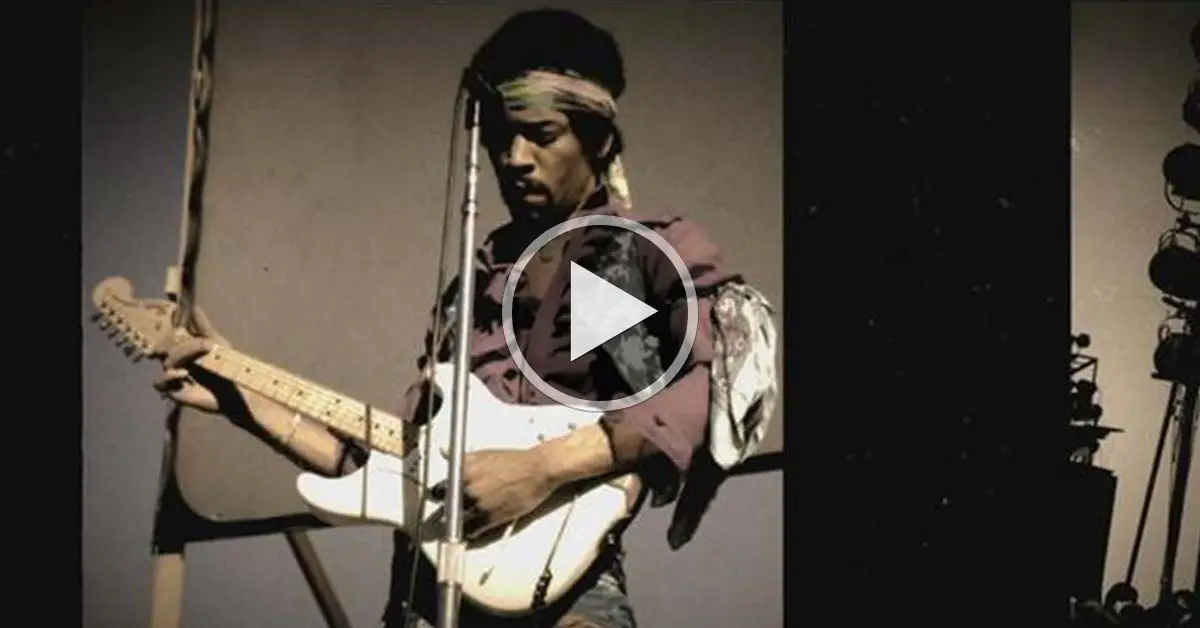
  • Jimi Hendrix – Rainbow Bridge

    Jimi Hendrix – Rainbow Bridge

    Foxy Lady – Rainbow Bridge

    From the movie Rainbow bridge where you can see Jimi Hendrix in concert backed by drummer Mitch Mitchell and bassist Billy Cox playing such mind-blowing musical milestones as “Purple Haze,” “Foxy Lady,” “Voodoo Chile,” and others atop Hawaii’s Haleakala Volcano.

    A soundtrack album, also titled Rainbow Bridge, was released in October 1971. Although it contains some incidental studio recordings by Hendrix used in the film, the album does not include any of the recorded performances from the Maui concert. Hendrix’s performances are edited for the film. Complete recordings of both sets (about 20 songs) have been released on several bootleg albums, sometimes being mistaken for official releases.

    Jimi Hendrix

    Jimi Hendrix, or rather James Marshall Hendrix was born on November 27, 1942, in Seattle, Washington. Under the influence of his father, he enlisted in the army. He was released after a spine injury sustained during a parachute jump.

    Hendrix learned to play the guitar himself. Until 1966, he performed in various bands, already then surprising with his perfect guitar playing. In late 1966, thanks to Chas Chandler, bassist of The Animals, who brought him to London, Hendrix formed The Jimi Hendrix Experience, which included Noel Redding – bass guitar and John “Mitch” Mitchell – drums.

    The first single, recorded in late 1966, featured Billy Roberts’ dramatic ballad “Hey Joe” and was a huge success.

    In London, Hendrix befriended Eric Clapton. He is the one who describes Hendrix’s first performances: “I think he played a Howlin ‘Wolf song or something. He played the guitar with his teeth, put it on the floor, held the guitar behind his head and made other wobbles. It was unbelievable” …

    Initially, Hendrix moved to Hyde Park Towers with Chas Chandler, and then to an apartment that previously belonged to … The Beatles – at 34 Montague Square.

    The Jimi Hendrix Experience released the second single “Purple Haze” on March 17, 1967, and the third single, “The Wind Cries Mary”, was released on May 4, 1967. They all reached the top ten of the UK charts.

    In 1969, Hendrix formed a new band called Band of Gypsys. A year later, he joined Eric Burdon and the War group.

    On September 18, 1970, after a concert at Ronnie Scott’s club in London, Jimi Hendrix at the age of 27 died intoxicated with drugs and alcohol.

    The funeral was held on October 1 at Dunlap Baptist Church on Rainier Avenue South in Seattle. A bronze statue of Hendrix stood on the Isle of Wight, the venue of his last concert.

    blues music t-shirts