Fb-Button
Bob Dylan Archives - I Love Blues Guitar
I Love Blues Guitar

Tag: Bob Dylan

  • Bob Dylan and Susan Tedeschi – Highway 61 Revisited [video]

    Bob Dylan and Susan Tedeschi – Highway 61 Revisited [video]

    Bob Dylan and the Blues: Tracing the Legacy of ‘Highway 61 Revisited’

    Bob Dylan’s 1965 anthem “Highway 61 Revisited” stands as a testament to the enduring influence of blues on rock music. Its raw energy and lyrical prowess captured the attention of blues musicians and aficionados alike, marking it as a pivotal point in the genre’s evolution. But what exactly about this song resonated with blues legends such as Johnny Winter?

    For starters, “Highway 61 Revisited” is steeped in the blues tradition. The song’s title itself is a nod to the legendary Highway 61, known as the “Blues Highway,” which runs from Dylan’s home state of Minnesota down to New Orleans, cradling the heart of blues country. The track’s structure and Dylan’s vocal delivery pay homage to the blues, with a contemporary twist that brought the genre to the forefront of the 60s rock scene.

    Johnny Winter, known for his fiery guitar work and soulful vocals, found a kindred spirit in Dylan’s songwriting. Winter’s own style, which seamlessly blended rock with traditional blues, echoed the innovation Dylan brought to the table with “Highway 61 Revisited.” The song’s recognition among blues musicians can be attributed to its authenticity and its ability to bridge the gap between the old and the new, resonating with artists who were pushing the boundaries of blues music.

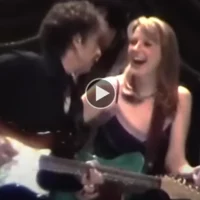
    The connection between Bob Dylan and the blues was further solidified during a memorable performance in Newark in 1999, where he was joined on stage by blues guitarist and vocalist Suzan Tedeschi. Tedeschi, known for her gritty and expressive performances, complemented Dylan’s presence, creating a synergy that highlighted the song’s blues roots. This collaboration was not just a performance; it was a celebration of the blues heritage that “Highway 61 Revisited” so brilliantly encapsulated.

    The song’s legacy is not just in its melody or lyrics, but in its ability to unite artists across generations, paying homage to the blues while carving out its own place in music history. For blues enthusiasts and musicians, “Highway 61 Revisited” is more than just a track—it’s a milestone that marks the journey of blues into the modern era.

    In conclusion, Bob Dylan’s “Highway 61 Revisited” is a cultural touchstone that has earned its place in the pantheon of blues music. Its impact on artists like Johnny Winter and its live rendition with Suzan Tedeschi are testaments to its timeless appeal and its role in shaping the blues genre. As we look back on this iconic song, we are reminded of the power of music to transcend boundaries and bring people together in a shared appreciation of the blues.

    Official Audio

    Thank you

    We appreciate your time and dedication to reading our article. For more of the finest blues guitar music, make sure to follow our Facebook page, “I Love Blues Guitar”. We share exceptional selections every day. Thank you once again for your continued support and readership.

  • Bob Dylan – Mr. Tambourine Man

    Bob Dylan – Mr. Tambourine Man

    Bob Dylan’s Mystical Invitation: “Mr. Tambourine Man”

    In the vast galaxy of Bob Dylan masterpieces, “Mr. Tambourine Man” sparkles like a lantern guiding listeners into a dreamlike world where poetry reigns, reality blurs, and a single voice-and-guitar performance can reshape the entire landscape of modern songwriting. Released in 1965 on Bringing It All Back Home, the song is Dylan at his most enchanting—part folk ballad, part surrealist journey, and entirely timeless.


    A Song That Opened a Door to a New Kind of Lyric

    By 1965, Dylan was already shaking the folk world, but “Mr. Tambourine Man” pushed past the boundaries of what a song could be. Gone were straightforward protest lines—here came images of gypsy wanderers, swirling ships, ragged clowns, and dancing spells.

    Image

    Dylan’s lyrics invited listeners to step into a visionary space where logic took a backseat and emotion drove the car. It wasn’t psychedelia yet—this was pre-psychedelic, a hint at the revolution that was about to sweep through music.

    Many believe the tambourine man represents artistic inspiration itself. Others see a spiritual guide. Still others think Dylan simply wrote what felt right in the moment. That mystery is part of the magic.


    A Performance Filled With Fragility and Fire

    Dylan recorded “Mr. Tambourine Man” with just his voice, acoustic guitar, and Bruce Langhorne’s beautifully atmospheric electric guitar lines. Langhorne—often called the real-life “tambourine man”—brought a shimmering delicacy that lifted the song into a dreamlike plane.

    Image

    Dylan’s vocal is emotive and unguarded, with that unmistakable mid-’60s tremble that makes every line feel more like a confession spoken to the stars than a performance in a studio.


    The Byrds and the Birth of Folk-Rock

    Just months after Bob Dylan released it, The Byrds electrified the world with their jangly, harmony-heavy version of “Mr. Tambourine Man.” Their adaptation turned Dylan’s poetic folk ballad into a No. 1 pop hit and effectively launched the folk-rock movement.

    Dylan once joked he thought the Byrds played the song “too pretty,” but the two versions became linked forever—one earthy and introspective, the other bright and soaring. Together, they showed the song’s remarkable versatility and its power to speak across genres.


    A Song That Captured the Spirit of a Generation

    “Mr. Tambourine Man” arrived at a time when people were searching for new ways to express freedom, imagination, and personal truth. The song became a beacon for dreamers, artists, and wanderers—anyone who felt the tug of something beyond the ordinary.

    Its mix of gentle melancholy and euphoric release made it a defining track of the 1960s. Rolling Stone would later rank it among the greatest songs of all time—not because it preached or demanded, but because it invited.


    A Timeless Journey Still Calling Us Forward

    Nearly sixty years later, “Mr. Tambourine Man” hasn’t lost its spell. It remains a symbol of Bob Dylan ’s lyrical alchemy—how he could turn a handful of chords and poetic imagery into a universe listeners still explore today.

    And every time he sings that unforgettable line:

    “Hey, Mr. Tambourine Man, play a song for me…”

    …it feels like an open door to a world where creativity, wonder, and possibility live without limits.

    A song you don’t just hear—you follow.

  • Bob Dylan – Duquesne Whistle

    Bob Dylan – Duquesne Whistle

    Bob Dylan – Duquesne Whistle: The Train That Keeps on Rolling

    When the Whistle Blows, You Listen

    From the moment that faint, old-timey guitar and gentle swing rhythm begin, “Duquesne Whistle” feels like stepping into another era. Released in 2012 as the opening track of Tempest, it’s Bob Dylan tipping his hat to the golden age of trains — and maybe to his own long, unpredictable journey through American music.

    The first time I heard it, I thought it sounded like a lost tune from the 1930s — until that unmistakable Dylan snarl slid in. Then it became something only he could write: part celebration, part eulogy, and all grit.

    A Song with Steam and Soul

    “Duquesne Whistle” was co-written with Robert Hunter, the Grateful Dead’s longtime lyricist, and their collaboration brings out Dylan’s love for traditional Americana. The Duquesne whistle itself — named after the old railroad line that ran through Pennsylvania — becomes both a literal and metaphorical symbol: a train rolling through time, carrying memories, regrets, and ghosts.

    As the song chugs along, it moves from playful to ominous, a shift that mirrors Dylan’s fascination with the past and the unstoppable march of time.

    The Lyrics: Between Romance and Reckoning

    At first, it feels like a lighthearted travel song —

    “Listen to that Duquesne whistle blowing / Blowing like she’s never blowed before.”

    But as it unfolds, the lyrics darken, drifting into surreal imagery and spiritual yearning. The whistle becomes more than sound — it’s fate, destiny, maybe even death calling in the distance.

    That’s Dylan for you: even a train song can feel like scripture.

    The Music: Swing Meets Shuffle

    Musically, “Duquesne Whistle” is one of Dylan’s most charming late-career tracks. It starts with a lilting jazz rhythm straight out of a speakeasy, then builds into a bluesy stomp with rough-edged guitars and growling vocals. It’s loose, alive, and full of the kind of imperfections that make Dylan’s music timeless.

    His band sounds fantastic here — relaxed yet razor-sharp — channeling that vintage Americana vibe with authenticity and warmth.

    The Video: A Surreal Journey Through the Modern World

    The music video, directed by Nash Edgerton, takes a darker, unexpected turn. It begins as a quirky, Chaplin-esque romance — a young man following a woman through the city — before spiraling into chaos and violence. It’s jarring but brilliant, capturing the same tonal shift that runs through the song.

    Like much of Dylan’s work, it’s both funny and unsettling — a wink and a warning rolled into one.

    A Fan’s Reflection

    I remember listening to “Duquesne Whistle” while driving through the countryside, the sun setting and the road stretching out ahead. It felt cinematic — that mix of nostalgia and mystery that Dylan always nails.

    It reminded me that Dylan’s magic isn’t just in the words — it’s in how he makes time feel elastic. The song sounds a hundred years old and brand new all at once.

    Why Duquesne Whistle Keeps Rolling

    More than a decade after its release, “Duquesne Whistle” still stands as one of Bob Dylan’s great modern works — playful yet profound, steeped in history but always looking forward.

    It’s the perfect metaphor for Dylan himself: still moving, still unpredictable, still full of steam. When that whistle blows, you know it’s him — rolling down the track, one step ahead of everyone else.

  • Bob Dylan – Like A Rolling Stone

    Bob Dylan – Like A Rolling Stone

    Bob Dylan – “Like a Rolling Stone”: The Song That Rewrote Rock ‘n’ Roll

    Few songs in history mark a before and after moment, but Bob Dylan’s “Like a Rolling Stone” didn’t just change his career—it changed the very DNA of popular music. Released in 1965, it was the sound of a seismic shift: poetry crashing into rock, acoustic folk morphing into electric fire, and Dylan stepping fully into his role as the voice of a restless generation.

    More than half a century later, “Like a Rolling Stone” remains one of the most celebrated, dissected, and influential recordings ever made. It’s not just a song—it’s a declaration of independence, both personal and cultural.

    The Sound: When Dylan Plugged In

    “Like a Rolling Stone” begins with a whipcrack of a snare drum, and from that moment on, it never lets up. It was Dylan’s first major release with a full electric band, and the sound was revolutionary—gritty organ swirls, jangly guitars, thudding bass, and a propulsive beat that rolled like a freight train.

    Al Kooper’s swirling Hammond B3 organ, famously added as a spontaneous overdub, became the song’s secret weapon, swirling behind Dylan’s vocal like a restless spirit. Mike Bloomfield’s guitar work adds edge and attitude without ever stealing focus.

    The result? A sound that was too electric for folk purists, too poetic for pop radio, and yet utterly irresistible.

    The Lyrics: Cutting, Cryptic, and Cold as Ice

    “Once upon a time you dressed so fine / Threw the bums a dime in your prime, didn’t you?”

    From the first line, Dylan turns the mirror back on the listener—or more specifically, on a character who once held power, privilege, or illusion and now finds themselves adrift, exposed, and alone.

    “Like a Rolling Stone” is a six-minute epic of verbal venom and lyrical genius, structured around a repeated, devastating chorus:

    “How does it feel / To be on your own / With no direction home / Like a complete unknown / Like a rolling stone?”

    It’s not just a song about a fall from grace—it’s a song about identity stripped bare. And yet, it’s never self-pitying. It’s accusatory, liberating, and hauntingly universal. Dylan’s delivery is sneering, snarling, and impossibly alive.

    Revolution on the Radio

    When Columbia Records released “Like a Rolling Stone” in July 1965, they were hesitant. At over six minutes, it was twice as long as most singles. But the song was too powerful to ignore. DJs began playing it in full, and it climbed to #2 on the Billboard Hot 100, just behind the Beatles’ “Help!”

    This was a turning point. Dylan proved that songs could be long, literate, angry, surreal, and still top the charts. The boundaries of rock had just been blown open.

    Cultural Shockwaves: Dylan as Prophet and Provocateur

    “Like a Rolling Stone” cemented Dylan’s transformation from folk troubadour to electric oracle. He debuted it live at the infamous Newport Folk Festival in 1965, where die-hard folk fans booed as he plugged in his Stratocaster. To some, he had “betrayed” folk purity. But to others, he had just invented something new—a bold, poetic, plugged-in kind of rock and roll.

    The song became a cultural touchstone. It’s been interpreted as a critique of privilege, a comment on social upheaval, and a personal purging. Dylan never confirmed its exact inspiration—possibly socialites like Edie Sedgwick, or just a larger commentary on fading illusions—but that’s part of the power. It invites projection, reflection, and endless reinterpretation.

    Legacy: The Greatest Song Ever Written?

    Critics have often called “Like a Rolling Stone” the greatest rock song ever made. In 2004 and again in 2021, Rolling Stone magazine ranked it #1 on their list of the 500 Greatest Songs of All Time. It has influenced artists from Bruce Springsteen and Patti Smith to U2 and The Rolling Stones.

    More than that, it changed how music was written, produced, and understood. It helped birth album-oriented rock, gave legitimacy to lyric-driven songwriting, and showed that intellectual, emotional, and rebellious depth could coexist in pop music.

    Final Thoughts

    “Like a Rolling Stone” is not just a milestone.
    It’s a revolution in four verses and a chorus.

    It told the world that rock could be literature. That music could confront, confound, and challenge. That one voice, one snare crack, one sneer of a line could shake the walls.

    So how does it feel?
    To hear it again today?
    Like the first time, every time.


    Want to dive deeper into Dylan’s electric era with “Ballad of a Thin Man,” “Tombstone Blues,” or “Just Like Tom Thumb’s Blues”? Or explore the folk roots of his transformation in The Freewheelin’ Bob Dylan? Just let me know!

  • Bob Dylan and Susan Tedeschi – Highway 61 Revisited

    Bob Dylan and Susan Tedeschi – Highway 61 Revisited

    Bob Dylan and Susan Tedeschi – Highway 61 Revisited

    Bob Dylan and the Blues: Tracing the Legacy of ‘Highway 61 Revisited’

    Bob Dylan’s 1965 anthem “Highway 61 Revisited” stands as a testament to the enduring influence of blues on rock music. Its raw energy and lyrical prowess captured the attention of blues musicians and aficionados alike, marking it as a pivotal point in the genre’s evolution. But what exactly about this song resonated with blues legends such as Johnny Winter?

    For starters, “Highway 61 Revisited” is steeped in the blues tradition. The song’s title itself is a nod to the legendary Highway 61, known as the “Blues Highway,” which runs from Dylan’s home state of Minnesota down to New Orleans, cradling the heart of blues country. The track’s structure and Dylan’s vocal delivery pay homage to the blues, with a contemporary twist that brought the genre to the forefront of the 60s rock scene.

    Johnny Winter, known for his fiery guitar work and soulful vocals, found a kindred spirit in Dylan’s songwriting. Winter’s own style, which seamlessly blended rock with traditional blues, echoed the innovation Dylan brought to the table with “Highway 61 Revisited.” The song’s recognition among blues musicians can be attributed to its authenticity and its ability to bridge the gap between the old and the new, resonating with artists who were pushing the boundaries of blues music.

    The connection between Bob Dylan and the blues was further solidified during a memorable performance in Newark in 1999, where he was joined on stage by blues guitarist and vocalist Suzan Tedeschi. Tedeschi, known for her gritty and expressive performances, complemented Dylan’s presence, creating a synergy that highlighted the song’s blues roots. This collaboration was not just a performance; it was a celebration of the blues heritage that “Highway 61 Revisited” so brilliantly encapsulated.

    The song’s legacy is not just in its melody or lyrics, but in its ability to unite artists across generations, paying homage to the blues while carving out its own place in music history. For blues enthusiasts and musicians, “Highway 61 Revisited” is more than just a track—it’s a milestone that marks the journey of blues into the modern era.

    In conclusion, Bob Dylan’s “Highway 61 Revisited” is a cultural touchstone that has earned its place in the pantheon of blues music. Its impact on artists like Johnny Winter and its live rendition with Suzan Tedeschi are testaments to its timeless appeal and its role in shaping the blues genre. As we look back on this iconic song, we are reminded of the power of music to transcend boundaries and bring people together in a shared appreciation of the blues.

    Video

    Thank you

    We appreciate your time and dedication to reading our article. For more of the finest blues guitar music, make sure to follow our Facebook page, “I Love Blues Guitar”. We share exceptional selections every day. Thank you once again for your continued support and readership.