I Love Blues Guitar

Category: Blues Musicians

  • John Lee Hooker & Ry Cooder – Hobo Blues

    John Lee Hooker & Ry Cooder – Hobo Blues

    John Lee Hooker and Ry Cooder playing blues together in shoreline Amphitheatre 10/10/1992. Ry Cooder slide guitar incredibly fits with John Lee singing and playing.

    John Lee Hooker

    Hooker was a notable American blues singer, guitarist and songwriter. His fame rose when he performed electric guitar adaptations of Delta Blues. He also has this inclination to insert early North Mississippi Hill country blues and talking blues into his music with a genius twist.

    He is often compared in greatness to B. B. King, who was also born in Mississippi, just like John Lee. King’s contribution to Delta blues was a comprehensive guitar technique that harmonized blues with components of jazz, rhythm and blues and other popular music genres.

    But John Lee Hooker created a style of his own, in contrast, by retaining a pure and traditional approach of the Delta blues. In the postwar, he achieved more success, doing a crossover, using vocals with solo guitar. This was the style of earlier Delta players that he adopted, used to the hilt in his hit record, Boogie Chillen, in 1948.

    The later releases of John Lee Hooker like I’m in the Mood (1951), Boom Boom (1962) and The Healer (1989), incorporated soul and rock music.

    When John Lee Hooker was starting out in his musical career, he performed and recorded with rock musicians. One of his earliest partnerships was with The Groundhogs, a British blues-rock band.

    In 1970, he played adaptations of his songs with the group Canned Heat, an American blues and boogie rock band. The result was the joint album Hooker ‘n Heat.

    At his best, only with his electric guitar strapped on him, Hooker describes his musical style:

    The display of aggressive energy in fast boogies and also an ample show of intensity for stark and slow blues. A back to the basics guitarist – playing simple harmonies, pentatonic scales and also one-chord modal harmonic structures.

    John Lee Hooker toured expansively beginning the 1950s and he also made appearances in movies like The Blues Brothers (1980) and The Color Purple (1985). He was inducted into the Rock and Roll Hall of Fame in 1991 and had a huge influence on bands such as The Animals and The Rolling Stones.

    John Lee Hooker recorded more than 100 albums. Among them was The Healer (1989) which had appearances by Carlos Santana and Bonnie Raitt. Other notable albums are The Best of Friends (1998) and Grammar Award winner Don’t Look Back (1997).

    Two of his songs, “Boogie Chillen” and “Boom Boom”, are included in the Rock and Roll Hall of Fame’s list of the 500 Songs That Shaped Rock and Roll. “Boogie Chillen” is also included in the Recording Industry Association of America’s list of the “Songs of the Century”.

    In 2007, John Lee Hooker was voted into the Michigan Rock and Roll Legends Hall of Fame.

    Ryland Peter “Ry” Cooder

    (born March 15, 1947) is an American musician. He is known for his slide guitar work, his interest in roots music from the United States, and, more recently, his collaborations with traditional musicians from many countries.

    His solo work has been eclectic, encompassing folk, blues, Tex-Mex, soul, gospel, rock, and much else. He has collaborated with many musicians, notably including Captain Beefheart, Ali Farka Touré, Eric Clapton, The Rolling Stones, Van Morrison, Neil Young, Randy Newman, David Lindley, The Chieftains, and The Doobie Brothers. He briefly formed a band named Little Village.

    John Lee Hooker & Ry Cooder – Hobo Blues
    John Lee Hooker & Ry Cooder – Hobo Blues
  • Paul McCartney and Johnny Depp – Blues Jamming

    Paul McCartney and Johnny Depp – Blues Jamming

    Exclusive Behind-the-Scenes Blues Jamming With Paul McCartney and Johnny Depp
    Exclusive Behind-the-Scenes Blues Jamming With Paul McCartney and Johnny Depp

    Sir Paul McCartney and Jonny Depp jamming with local blues musician in this 30 minutes behind-the-scenes clip. Video recorded during making ‘Early Days’ film.

    Back in July 2014, Paul McCartney released an inspiring video for his song “Early Days.” The Vincent Haycock-directed clip, which focuses on two ambitious entertainers in the American South of the 1950s, also led a large on-set jam session in Los Angeles, where Sir Paul was signed up with by a number of neighborhood musicians (as well as buddy Johnny Depp). The outcomes of that loose, 30-minute jam– very first discussed on McCartney’s site– are available over… (source: rollingstone.com )

    Paul McCartney - Pure McCartneyMore Info

    This collection exemplifies some of the best of McCartney’s work as we get rockers to ballads and everything in between.. Not all of Paul’s best tracks are in this collection.. That would take a 7-8 cd release. As it is, the listener is getting tracks from virtually every studio album Paul has released since 1970’s “McCartney” thru 2013’s “New” so.. if a song your looking for is not in this collection, just go ahead and pull the cd that song is on.. and.. There you go! Personally, I wanted to see “Tug Of War/”Take It Away” in this collection however those songs were passed over in favor of other tracks.. I own all of McCartney’s studio, live and compilation releases as well as his recently issued “Archive Collection” releases so I pulled out “Tug Of War” and listened to the above titled tracks. It’s not a big issue that those songs aren’t in the collection as this compilation does include plenty of other songs from his early 80’s output anyway.
    This set is not intended to be a greatest hits collection nor a complete career overview. Rather it is a very interesting (and entertaining) compilation

  • B B King blues  – Woke Up This Morning – 1956

    B B King blues – Woke Up This Morning – 1956

    [device]
    https://www.youtube.com/watch?v=CHcRKRSYWcc
    [/device]

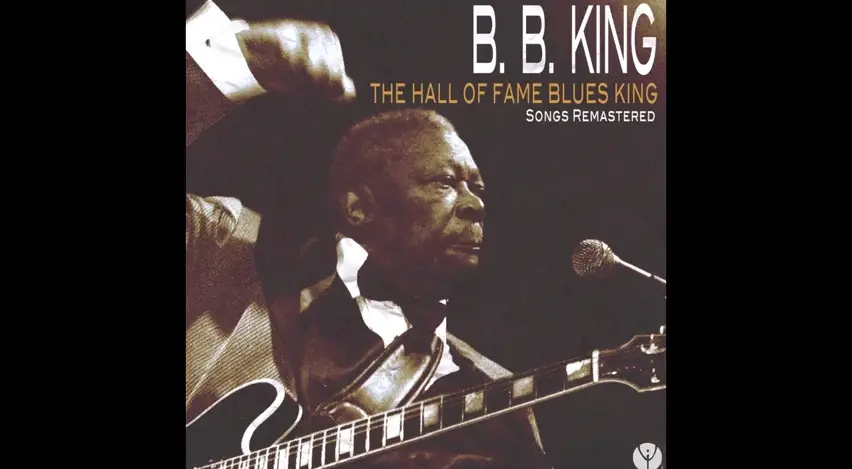
    B B King blues from 1956

    We know that music is a sequence of notes which, one after the other, form a melody. It can be catchy cacophonic, pleasant, relaxing or aggressive, but melody comes out of the notes making songs, arias, ballads, instrumental pieces and more; the first step, anyway, is to be made in a music instruments shop, as it happened to Riley B. King, better known as B B King Blues Boy King.

    b-b-king-blues

    He was born in 1925, and when he was a child he worked in the fields of Mississippi picking cotton with his mother and his grandmother, but he had a passion for music which he started singing the Gospel in the church. Then his passion for guitars arrived: when he was 12 he bought his first guitar, and his technique improved when, in 1943, he decided to move to Tennessee, in Memphis: there his cousin Bukka White, who played the guitar in the country blues, helped him.

    Then, with guitar and microphone, he started playing in the radio and recording his voice and guitar, which he started to improve with the typical effects of the instrument. Always with his guitar, B.B. King started to climb his ladder to success and nowadays, at the age of 85, he is still at the top: hes a giant of blues, and with his guitar he rides the world to make people listen to his music.

    His beloved Lucille is a Gibson ES-335, even though Gibson now called this model Lucille, after the B B King Blues Maestro: its a semi-acoustic guitar able to follow him, who is considered the greatest living bluesman, in his inventions and musical prodigies. The creation of the vibrato technique is attributed to him; in the guitar you obtain it by crossing the strings, nearing the one to which you are giving the effect to the string next to it; this effect has been named hummingbird. (source: http://ezinemark.com)

  • Walter Trout The Blues Came Callin’

    Walter Trout The Blues Came Callin’

    Walter Trout is best known for his stint in Canned Heat as well as being in John Mayall’s Bluesbreakers. His latest album is titled “The Blues came callin” and is a very personal take on his much publicized health problems.

    The first track is called “Wastin Away” and is very much about his recent illness accompanied by a very blues rock sound. He then takes us into “The World is Goin’ Crazy (And so Am I).” which is a very rocking politicized view of what is going on around us today. There is no disguising the inspiration for the next track, “The Bottom of the River” this depicts a drowning man who decides that he needs to fight to get to the surface and mirrors the recent brush with death that Walter experienced.

    Walter Trout – The Blues Came Callin’ – album teaser

    The next track, “Take a Little Time,” pays homage to the Chuck Berry sound of the 1950s and then we are into “Willie,” which is Walter’s vitriolic opinion of the management within the music industry. “Born in The City” gives us a chance to hear the driving, rocking guitar playing that is associated with Walter. We then have an instrumental a la Freddie King entitled, “Tight Shoes.”

    Walters involvement with John Mayall is evident with the next track “The Whale” and although this is a cover of the original by J.B. Lenoir, it is clearly seen as a tribute to John Mayall. The aforementioned Mr Mayall guests on the next 2 tracks “The Blues Came Callin’” and “ Mayall’s Piano Boogie.”

    Win Walter Trout, Keb Mo and Kenny Wayne Shepherd albums

    The final track on the album is “Nobody Moves Me Like You Do,” and has been described by Walter a tribute to his wife. This is his gift to her for standing by him and giving support when he was at death’s door. He admits that he now realizes the true value of life and what his family mean to him. His recent health scare has undoubtedly influenced this album and the depth of feeling that pours out epitomizes what Blues music is all about.

    Walter Trout album is available on Amazon.com:

    The Blues Came Callin (with bonus DVD documentary)

    [get-notified-button]
  • Lonnie Brooks – Woke Up This Morning

    Lonnie Brooks – Woke Up This Morning

    Lonnie Brooks: A Blues Legend with a Unique Sound

    When it comes to the legacy of American blues, few names stand out quite like Lonnie Brooks. A masterful guitarist and soulful singer, Brooks carved out a distinct place in blues history with his fiery licks, expressive voice, and a unique fusion of blues, rock, and Louisiana swamp rhythms. His impact on the genre remains undeniable, and his music continues to inspire generations of blues musicians and fans alike.

    Early Life and Musical Beginnings

    Born Lee Baker Jr. on December 18, 1933, in Dubuisson, Louisiana, Brooks was raised in a region steeped in the rich traditions of the blues. His first major musical influences came from artists like Clarence “Gatemouth” Brown and T-Bone Walker, who helped shape his distinctive guitar style. In the early 1950s, Brooks relocated to Port Arthur, Texas, where he began performing under the name Guitar Jr. and developed his reputation as a rising blues talent.

    His first taste of recording success came with “Family Rules”, a regional hit that showcased his ability to blend blues with a touch of rock and R&B. However, it wasn’t until he moved to Chicago in the 1960s that his career truly took off.

    The Chicago Blues Scene and Lonnie Brooks’ Signature Sound

    Upon arriving in Chicago, Brooks found himself immersed in one of the most vibrant blues scenes in the world. He changed his stage name to Lonnie Brooks, as there was already another artist known as Guitar Jr. in the area. Chicago, known for its electrified blues sound, became the perfect backdrop for Brooks’ evolving style.

    Unlike many traditional Chicago blues players, Brooks fused elements of his Louisiana upbringing—swamp blues and zydeco—with the hard-driving urban blues of the Windy City. This signature blend made him stand out among his contemporaries. His aggressive yet melodic guitar work and emotive singing set him apart, earning him the admiration of blues greats such as Muddy Waters and Buddy Guy.

    Breakthrough and Career Highlights

    Lonnie Brooks’ big break came in the late 1970s when he signed with Alligator Records, a label dedicated to promoting blues artists. His 1979 album, “Bayou Lightning”, became a major success and introduced a broader audience to his high-energy brand of blues. The album featured standout tracks like “Voodoo Daddy” and “I Can Tell”, which demonstrated his ability to blend traditional blues with rock-driven guitar riffs.

    Throughout the 1980s and 1990s, Brooks continued to release critically acclaimed albums, including “Hot Shot” (1983), “Wound Up Tight” (1986), and “Satisfaction Guaranteed” (1991). He toured extensively, bringing his electrifying performances to audiences across the United States and Europe. His charismatic stage presence and dynamic guitar skills solidified his reputation as one of the most exciting live performers in blues.

    Influence and Legacy

    Brooks not only left a lasting impact through his own music but also through his influence on younger generations of blues musicians. His son, Ronnie Baker Brooks, followed in his father’s footsteps, becoming an accomplished blues guitarist and carrying on the family tradition.

    In 2010, Brooks was honored with a Lifetime Achievement Award from the Blues Hall of Fame, a testament to his enduring contributions to the genre. His music remains a bridge between the deep roots of Delta blues, the energetic swing of Chicago blues, and the rhythmic drive of Louisiana swamp rock.

    Final Years and Passing

    Even in his later years, Brooks continued to perform, delivering passionate performances that captivated audiences worldwide. Sadly, he passed away on April 1, 2017, at the age of 83. His death marked the loss of a true blues pioneer, but his music continues to live on, influencing new generations of blues lovers and musicians.

    Conclusion

    Lonnie Brooks’ legacy is one of passion, innovation, and authenticity. His ability to blend diverse musical influences into a powerful and unique sound has cemented his place in blues history. Whether you’re a longtime blues aficionado or just discovering the genre, diving into Brooks’ discography is a must. His music embodies the raw energy, storytelling, and emotional depth that make the blues so timeless.

    For those looking to experience his magic, albums like “Bayou Lightning”, “Hot Shot”, and “Live from Chicago” are excellent places to start. Lonnie Brooks may be gone, but his music ensures that the blues will keep rolling on.

    Discography of Lonnie Brooks

    1999 Lone Star Shootout (with Long John Hunter and Phillip Walker)(Alligator)
    1997 Deluxe Edition (Alligator)
    1996 Roadhouse Rules (Alligator)
    1993 Let’s Talk It Over (1977 session), (Delmark)
    1991 Satisfaction Guaranteed (Alligator)
    1988 Live From Chicago-Bayou Lightning Strikes (Alligator)
    1986 Wound Up Tight (Alligator)
    1985 Live at Pepper’s (Black Magic) (reissued on Black Top, 1996)
    1984 The Crawl (Charly) (reissue of Goldband singles)
    1983 Hot Shot (Alligator)
    1981 Turn On The Night (Alligator)
    1980 Blues Deluxe (Alligator/WXRT)
    1979 Bayou Lightning (Alligator)
    1978 Living Chicago Blues, Vol.3 (Alligator)
    1975 Sweet Home Chicago (Black & Blue) (reissued on Evidence Records, 1994)
    1969 Broke An’ Hungry (Capitol)

    Thank You

    We appreciate your time and dedication to reading our article. For more of the finest blues guitar music, make sure to follow our Facebook page, “I Love Blues Guitar”. We share exceptional selections every day. Thank you once again for your continued support and readership.

  • Little Walter honored by musicians in Alexandria

    Little Walter honored by musicians in Alexandria

    Musicians honor Little Walter with second annual festival in Alexandria

    It was the second Little Walter Music Festival, and acts came from as far away as Japan.

    “Blues music grabbed the heart of the Japanese people,” she said. “Little Walter is a legend. He is very, very famous.”

    Nacomi Tanaka and the Blues Temple traveled from Osaka to Alexandria to play a short mid-day set at the festival.

    Tanaka said Little Walter is quite popular in Japan, thanks to a blues revival that spread through the country in the late 1970s.
    See Original Article

    Little Walter Music Festival

    Blues Fest artist creates with Sharpies and paint

    Matt Long of Frederick, Md., combined his love of blues music and art to create a piece for the Western Maryland Blues Fest. The 28-year-old graphic …
    See Original Article

    New Prairie Belt Blues Foundation takes root in the Golden Triangle

    The annual Howlin’ Wolf Blues Festival, sponsored by the Howlin’ Wolf … “The Prairie Arts Festival and blues music go together, and the PBBF looks …
    See Original Article

  • Jukehouse Bombers on Indiana blues festival

    Jukehouse Bombers on Indiana blues festival

    The 1st Delaney Chevrolet Westsylvania Jazz & Blues Festival nails Indiana’s IRMC Park on North Seventh Street May 24, giving with it a possibility to take pleasure in live music free of charge and a chance for local performers to rub elbows with countrywide big names.

    The Jukehouse Bombers, established in Indiana and led by guitar players Jimmy Roach and his son, Joe, will be playing a set in tribute to regional blues guitar legend Jeff Kelley, who passed away of cancer last year.

    Jukehouse Bombers CD
    (photo source amazon.com)

    The Jukehouse Bombers started performing with each other in 2012. In addition to the Roaches, who both share vocals, the band includes bass player and vocalist Troy Laney of Elmora and drummer Mark Kephart of DuBois. The group’s repertoire consists of barrelhouse blues, soul and classic rock with original work and also covers.

    See Original Article

    Jukehouse Bombers – Born to hard times

    Fish shocks the blues

    Samantha Fish has been doing a lot of blues festivals lately, as well as presenting at the Blues Music Awards, where she previously won an award for Best New Artist Debut.

    The problem is, though the 25-year-old singer and guitarist was raised on blues and country, Fish doesn’t really see herself as much a blues musician as she does a straight-up rocker.
    See Original Article

  • Cajun and blues music fill the air in Simi Valley

    Cajun and blues music fill the air in Simi Valley

    Influenced by his father, who was part of the Louisiana blues music scene, … Each year, 100 percent of the money raised at the celebration goes to local …
    See Original Article

    BBQ, Blues & & Bikes attacks the streets of downtown Elizabethtown May 24

    … smell of BBQ, the smokin' ' audios of blues music and the sight of thousands of motorcycles. … This Household Friendly celebration will continue well into the night with awesome BBQ and nine live blues acts on two phases till 10:00 PM.
    See Original Short article

    Fort Smith Blues Celebration To Be Moving Experience

    Blues music is said to heal one'' s soul in a matter of minutes, and a long … and chairwoman for the 24th annual Fort Smith Riverfront Blues Festival.
    See Original Short article

    Today'' s Music Picks: California Roots Music Festival comes to Monterey

    It'' s time for the Santa Cruz Blues Celebration, the two-day affair that always places amongst the leading blues music events of the year on the West Coastline.
    See Original Short article

  • Let the Blues Guitar Flow

    Let the Blues Guitar Flow

    written by: charletC

    It doesn’t matter if Tommy Johnson made a deal with Papa Legba on a lonely crossroads one night, the fact remains that blues has no equal.

    It is the basis of the great rock music so many has come to love and still remains one of the most difficult styles of music to play.

    Blues guitarists

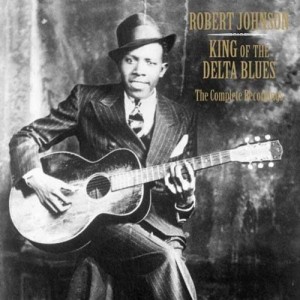
    Robert Johnson - King Of The Delta Blues The Complete RecordingBlues guitarists first started to get attention in the 1920’s with guys like Robert Johnson and Son House. By using knife blades and the broken necks from bottles they implemented a “slide”, creating something totally different. The style of blues at that time mainly consisted of unorganized solo sets, and it’s safe to say every time a song was played it sounded new. Remembering the chords wasn’t a top priority, but playing with heart and soul was definitely the main aim. This is most probably what sets blues apart from all the other genres. The technique was sloppy and playing in a constant time was for the birds. These guys pretty much played what they felt like playing and to hell with all the rules and regulations.

    Jump Blues

    Blues did however progress as the years went by, becoming somewhat more refined. In the 1940’s what was known as jump blues was incorporated into big bands, giving the guitar a position in the rhythm section. The influence this style had later became the corner stone for rock & roll. For those who hated blues it got worse in the 1950’s. For the lovers of this art it just got better, because the guitars started to get amplified. With the invention of electric guitars, blues really found a nice place in a more personal band setting, typically accompanied by drums and bass. Needless to say that keeping time also became somewhat important.

    Electric Blues

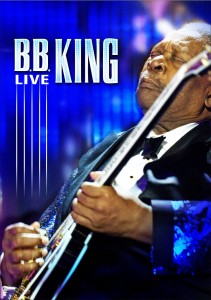
    B.B. King - Live - DVDMississippi was home to most of the great players like Muddy Waters and Jimmy Reed, who reveled in the new found electric sound. In their creative process they added harmonicas and saxophones to the mix. Hot on their heels was a man named B.B King with his own contribution. He decided to leave out the popular slide technique and went on to become one of the best players to have touched a guitar.

    As the blues guitar grew in popularity so did the styles and variations with which it was played. It spread across America and more names like John Lee Hooker and T-bone Walker found their place in the fire that is blues. It bridged all cultural boundaries and became a source of inspiration that brought great men to the same understanding.

    Although blues is heavily misunderstood by modern society and many will never know the passion and history that lies within its roots, there are still some who will find the magic. Nothing compares with listening to a blues guitar solo with its muffled execution and rebellious chord changes. Most importantly, nobody can dispute the fact that the blues opened the doors for the voices of great thinkers and fighters who stood up for human rights.

    If blues can be described in one word it would be honesty.

  • Boogie Chillen – Ukulele and Guitar Blues Instrumental

    Boogie Chillen – Ukulele and Guitar Blues Instrumental

    Blues musicians love to use unusual instruments. This band is no exception. Ukulele plus something what looks like a hand-made bass, accompanied by guitar and percussion.

    Everything plays beautifully like a well oiled machine.

    The band you can meet at the Nabolom Bakery in Berkeley, every Saturday morning (starting at 10 a.m.)

    On this video “Friends of Old Puppy” (this is the name of the band) play Boogie Chillen’.

    Shared on youtube by I.O.O.P.N.P.R.L.